
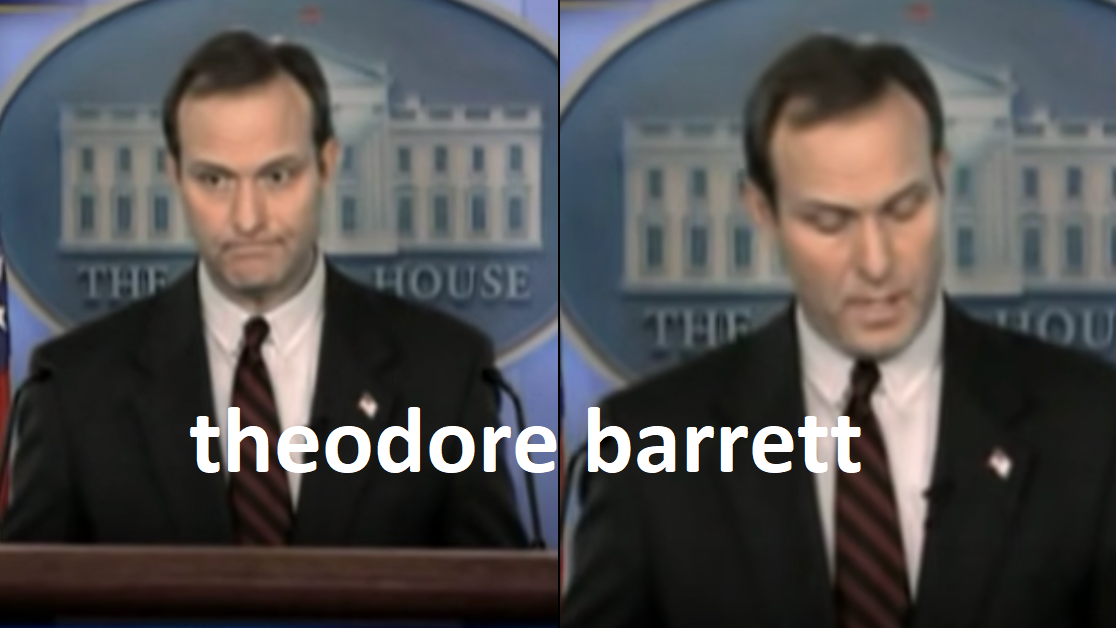
The name Theodore Barrett has circulated online for years, often surrounded by curiosity, confusion, and bold claims. Depending on where you look, you may find references tying the name to politics, viral interviews, government positions, or dramatic personal stories. Yet when you dig deeper, the situation becomes far more layered than most headlines suggest.
In this article, we will break down who Theodore Barrett is believed to be, why his name became a topic of online discussion, how misinformation played a role in shaping public perception, and what this teaches us about digital narratives. This isn’t about repeating rumors. It’s about analyzing how a name can take on a life of its own in the internet age.
Let’s explore the story carefully, logically, and professionally.
The Origins of the Theodore Barrett Name in Public Discourse
The first wave of attention surrounding Theodore Barrett came from viral content that appeared to show a government official behaving unusually during a press briefing. The video spread rapidly across social media platforms, with captions suggesting that he held a position in the U.S. government. Many viewers took the clip at face value without verifying its authenticity.
However, upon closer examination, researchers and fact-checkers discovered that much of the content connected to the name was satirical. The supposed press conference was part of a scripted performance. The dramatic backstory attached to the name was not supported by credible evidence. This is a classic example of how online audiences can misinterpret staged content as real.
What made the situation more complicated is that the name “Theodore Barrett” sounds entirely plausible for a public official. There is nothing unusual or exaggerated about it. That realism helped the narrative gain traction quickly. People tend to trust content that feels official, especially when it resembles government communication.
Over time, as the clip continued to circulate, new layers of speculation were added. Blog posts, social media threads, and forum discussions attempted to piece together a biography that did not actually exist in verified public records. This blending of fiction and assumption is one of the reasons the name continues to appear in search trends.
The Role of Satire and Viral Media

One of the most important aspects of the Theodore Barrett story is satire. In the digital era, satire often travels without context. A scripted video designed for humor can easily be clipped, reposted, and stripped of its original description. Once context is removed, viewers may interpret it as authentic.
Satirical content works best when it mimics reality convincingly. The production style of the viral Theodore Barrett clip followed the format of official government briefings: podium, formal language, press-style questions, and serious tone. Without a clear disclaimer, it looked legitimate to casual viewers.
The issue here is not the satire itself. Satire has long been a respected form of commentary. The real problem arises when the audience does not recognize it as satire. Social media algorithms amplify engaging content, not necessarily accurate content. Emotional reactions, whether shock or disbelief, push videos further into public feeds.
This is a key lesson in digital literacy. When we encounter a surprising clip involving a supposed public official, it is essential to verify the source. Is the video hosted on a credible news platform? Is the individual listed in official government directories? Has any reputable news organization reported on the event? In the case of Theodore Barrett, those verification steps reveal inconsistencies.
Misinformation and the Speed of Online Narratives
Theodore Barrett’s online presence highlights how quickly misinformation can spread. Once a narrative begins circulating, it gains momentum through repetition. Each repost strengthens perceived legitimacy. People often assume that if something appears in multiple places, it must be true.
The challenge is that many websites copy from each other. A single unverified story can be duplicated across dozens of blogs within hours. This creates an illusion of credibility. When readers search the name, they may find similar articles repeating the same claims, which reinforces belief.
In reality, credible biographies require documented records, official statements, and cross-referenced information. In the case of Theodore Barrett, verified institutional records do not support many of the widely circulated claims. That alone should prompt caution.
Another factor is the human tendency to enjoy dramatic narratives. The original viral content included emotional elements, which made it more shareable. Stories involving shock, tragedy, or unusual behavior naturally draw attention. Algorithms reward engagement, and engagement often favors dramatic storytelling over factual restraint.
The situation serves as a reminder that digital audiences must develop stronger critical thinking skills. Just because something looks professional does not mean it is authentic.
Separating Fiction from Reality
When analyzing the Theodore Barrett narrative, it becomes important to distinguish between three layers: the name itself, the viral content, and the constructed biography that followed.
First, the name Theodore Barrett is not inherently linked to any confirmed high-ranking public office in the widely circulated story. While there may be individuals with similar names in various professions, the specific viral persona appears to originate from scripted content.
Second, the viral video was produced as part of a performance. Once that context is acknowledged, many of the dramatic interpretations fall apart. Without context, viewers assumed real-world consequences and real political implications.
Third, the biography built around the name was largely assembled through speculation. Online communities often try to “fill in the blanks.” When details are missing, assumptions take their place. Over time, assumptions can solidify into perceived facts.
For professionals in media, communications, and research, this case demonstrates the importance of verification. A responsible approach involves checking primary sources, consulting official directories, and evaluating the credibility of the platform publishing the information.
Why the Name Still Trends Today
Even years after the original viral moment, people continue to search for Theodore Barrett. This ongoing curiosity is driven by a few factors.
First, viral content rarely disappears completely. It resurfaces periodically, often when shared by new users who are unaware of its origins. Each new wave of viewers restarts the cycle of confusion.
Second, search engines capture and preserve interest. When enough people look up a name, it becomes a suggested search term. That visibility encourages more searches, creating a feedback loop.
Third, controversy and mystery naturally attract attention. When people hear that something might not be real, they want to investigate for themselves. Ironically, attempts to debunk a story can sometimes increase its visibility.
This pattern is not unique to Theodore Barrett. Many viral personas follow a similar trajectory. A compelling piece of content gains attention, context is lost, speculation grows, and eventually fact-checkers step in. However, the internet rarely forgets.
Lessons from the Theodore Barrett Case
There are practical lessons to learn from this situation, especially for readers who consume information online daily.
The first lesson is to pause before sharing. If a clip or story appears shocking or unbelievable, that is precisely the moment to verify it. Strong emotional reactions are often what misinformation relies on.
The second lesson is to evaluate sources carefully. Established news organizations follow editorial standards and verification processes. Anonymous blogs and social media accounts do not necessarily follow those standards.
The third lesson is to understand how satire works. Satire can be valuable social commentary, but only when recognized as such. When stripped of context, it becomes misleading rather than insightful.
Finally, the case highlights the importance of media literacy education. In a world where anyone can upload content, viewers must take responsibility for critical evaluation.
Final Thoughts on Theodore Barrett
The story of Theodore Barrett is less about a specific individual and more about the power of digital narratives. A believable name, a professionally styled video, and rapid social media sharing combined to create a widespread misconception.
From an analytical perspective, this case illustrates how easily perception can diverge from reality. It also demonstrates how online ecosystems amplify ambiguity. Once a narrative gains traction, correcting it becomes significantly more difficult than starting it.
For readers searching for information about Theodore Barrett, the key takeaway is simple: approach the topic with skepticism and curiosity, not assumption. Investigate sources, question context, and remember that not everything presented online is what it appears to be.