
CAGED System Guitar The guitar is an instrument of infinite possibilities, but understanding its fretboard can sometimes feel like solving a complex puzzle. That’s where the CAGED system comes in—a powerful framework that simplifies learning scales, chords, and improvisation. Whether you’re a beginner eager to grasp the fretboard or an intermediate player looking to expand your soloing skills, the CAGED system is a game-changer. In this article, we’ll explore what the CAGED system is, why it’s useful, and how to implement it into your playing.
What is the CAGED System on Guitar?
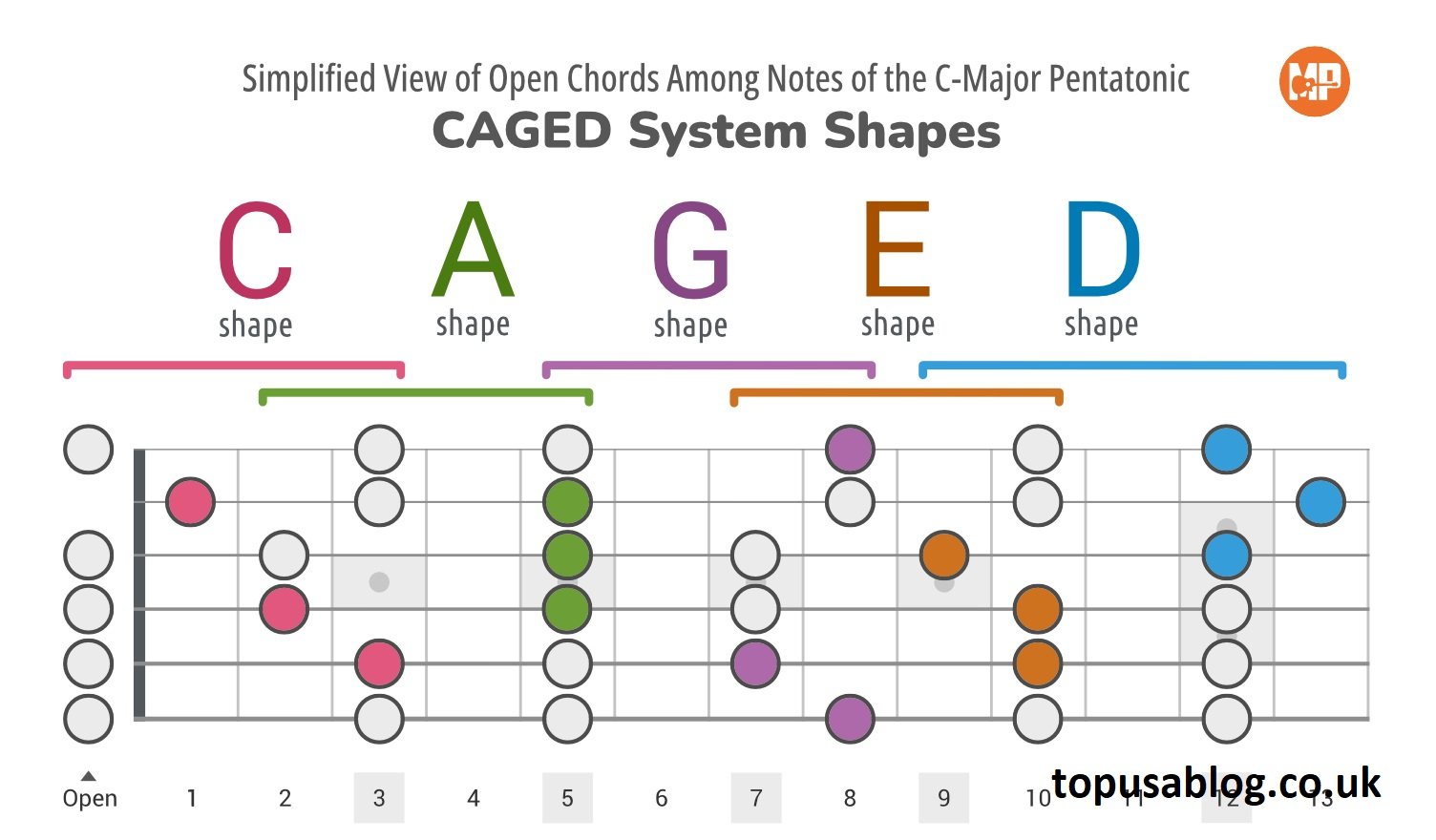
At its core, the CAGED System Guitar is a method for organizing chords and scales across the entire guitar neck. The name “CAGED” comes from the five basic open chord shapes: C, A, G, E, and D. By learning how these shapes connect and move up and down the fretboard, guitarists can play in any key, anywhere on the neck.
The brilliance of the CAGED system is its simplicity. Instead of memorizing random chord shapes and scales, you learn a logical pattern. For example, if you know the open C major chord, you can visualize that same chord shape in different positions, creating a roadmap of the fretboard. This makes transitioning between chords, improvising, and soloing much easier.
Many professional guitarists rely on the CAGED system without even thinking about it. While some might not explicitly use the term “CAGED System Guitar,” the principles are embedded in their playing, enabling them to navigate complex progressions effortlessly.
Why Guitarists Should Learn the CAGED System
Learning the CAGED System Guitar offers several key benefits for guitarists of all levels. Here are some reasons why you should consider incorporating it into your practice routine:Fretboard Mastery
One of the biggest challenges for guitarists is visualizing the fretboard. Unlike piano, where the layout is linear, the guitar’s fretboard is more complex due to repeating patterns and movable shapes. The CAGED system provides a visual map, helping you understand where each note, chord, and scale lies. Once you internalize it, you’ll start seeing the fretboard in a whole new way, making improvisation and chord transitions more intuitive Chord Flexibility
Most guitarists begin by learning open chords in the first few frets. While this works for basic songs, it limits your ability to play in different keys or positions. With the CAGED system, you can take any chord and play it across the neck, giving you greater flexibility. Want to play a C major chord in the 7th fret instead of the open position? TheCAGED System Guitar shows you exactly how to do it.Improved Soloing and Improvisation
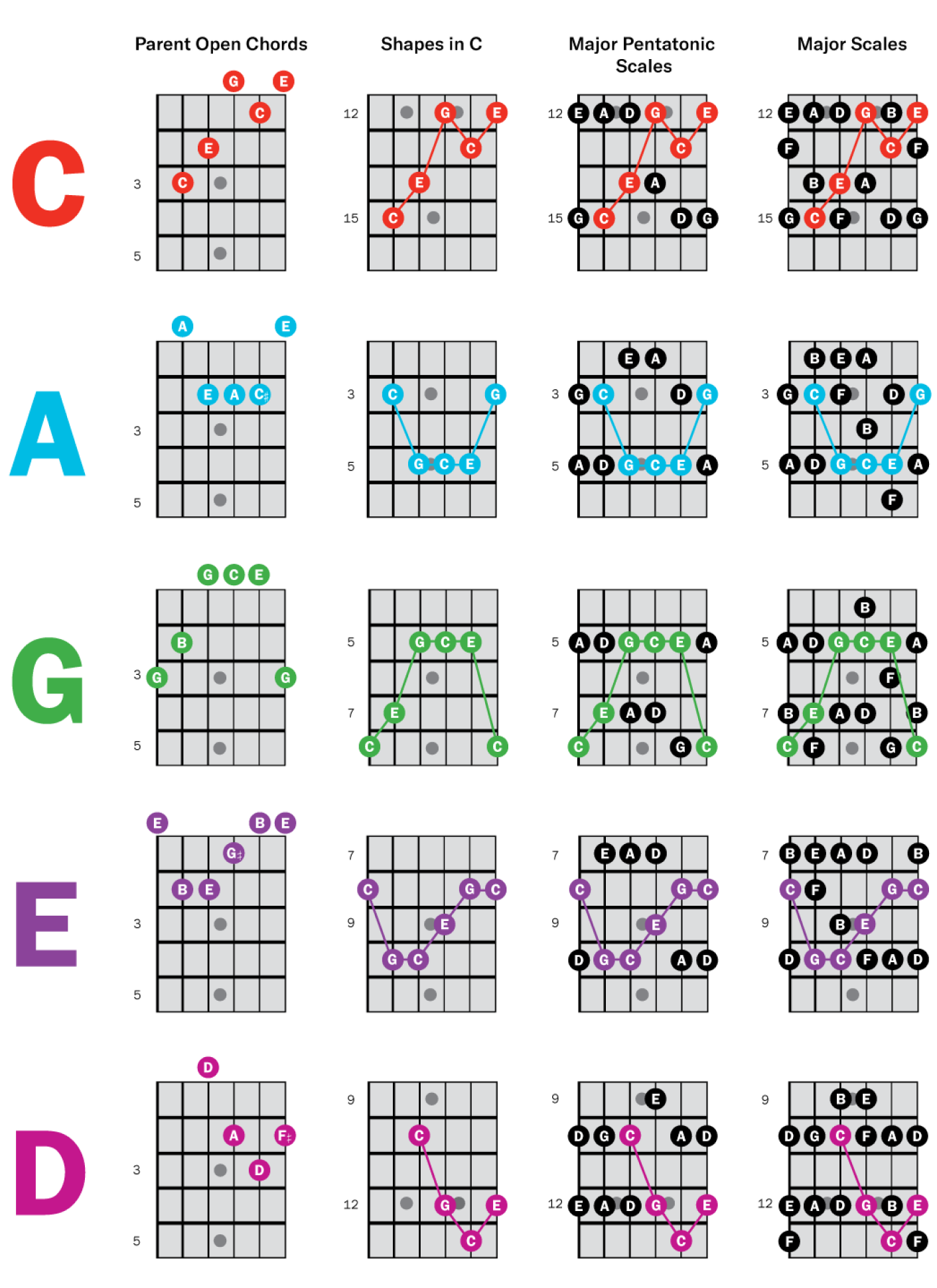
Scales and modes become much easier to navigate once you understand CAGED. Each chord shape corresponds to a scale pattern, which means you can solo in any position without guessing. For example, if you’re playing over a G major chord, you can quickly identify which notes from the G major scale fit perfectly with the chord shape you’re using. This makes improvisation more musical and less random.
Understanding the Five CAGED Shapes
To get the most out of the CAGED System Guitar , it’s essential to understand the five chord shapes it’s based on. Let’s break them down C Shape
The C shape is derived from the open C major chord. It’s often played in the lower frets and gives a bright, ringing tone. When moved up the neck with a barre, the C shape allows you to play any major chord while maintaining the same tonal characteristics A Shape
Originating from the open A major chord, this shape is highly versatile. It’s frequently used in rock and blues because it produces a strong, punchy sound. Moving the A shape up the neck allows you to play barre chords efficiently while maintaining a familiar finger pattern G Shape
The G shape comes from the open G chord and is recognized for its full, rich tone. While it can be trickier to play in higher positions due to finger stretches, mastering the G shape gives your playing a distinct flavor. It’s especially useful for chord inversions and jazz chords.E Shape
The E shape is one of the most popular barre chord forms, derived from the open E major chord. It’s the foundation for countless songs across genres. By learning the E shape in all positions, you gain access to a massive palette of chord voicings D Shape
Finally, the D shape originates from the open D major chord.CAGED System Guitar It’s known for its bright and sharp tonality, perfect for lead lines and melodic riffs. The D shape is often used in combination with other shapes to create smooth chord progressions.
How to Practice the CAGED System Effectively
Understanding the theory is one thing; applying it on the guitar is another. Here’s a practical approach to mastering CAGED System Guitar Step 1: Learn Each Shape Individually
Start by memorizing each of the five shapes in the open position. Play them slowly and ensure your finger placement is accurate. Once you’re comfortable, practice moving the shape up the neck using barre chords Step 2: Connect the Shapes
The magic of the CAGED system lies in connecting shapes. Visualize how the C shape leads into the A shape, which connects to the G shape, and so on. By understanding these connections, you’ll be able to move fluidly across the fretboard Step 3: Apply Scales
Once you’re comfortable with chord shapes, overlay the major scale patterns on top of them. Each CAGED shape corresponds to a specific scale pattern, making it easier to play melodies and solos that fit the chords you’re using Step 4: Practice in Different Keys
To truly master CAGED System Guitar, practice in every key. Start with simple keys like C, G, and D, and gradually move to more challenging ones like F# and Bb. This will solidify your understanding of the fretboard and make you a more versatile player.
Common Mistakes Guitarists Make with CAGED
Even experienced players can stumble when learning CAGED. Here are some pitfalls to watch out for:
Memorizing Shapes Only: Simply memorizing chord shapes without understanding the underlying theory limits your ability to use CAGED effectively Skipping Connections: Focusing on individual shapes without learning how they connect can make your fretboard navigation awkward Neglecting Scales: CAGED System Guitar isn’t just for chords—scales and soloing are equally important. Ignore them, and you miss out on the system’s full potential.
Conclusion: Unlocking the Guitar with CAGED
The CAGED system guitar method is more than just a set of chord shapes; it’s a framework that empowers you to play freely across the entire fretboard. By mastering CAGED System Guitar, you gain fretboard knowledge, chord flexibility, and the ability to improvise confidently. Whether you’re strumming open chords or shredding lead lines, the CAGED system provides the roadmap you need to unlock your guitar’s full potential.
Remember, like any technique, mastering CAGED requires patience and consistent practice. Start slow, focus on connecting shapes, and apply scales over chords. Over time, you’ll find that navigating the fretboard becomes second nature, and your playing will reach new levels of musicality.