
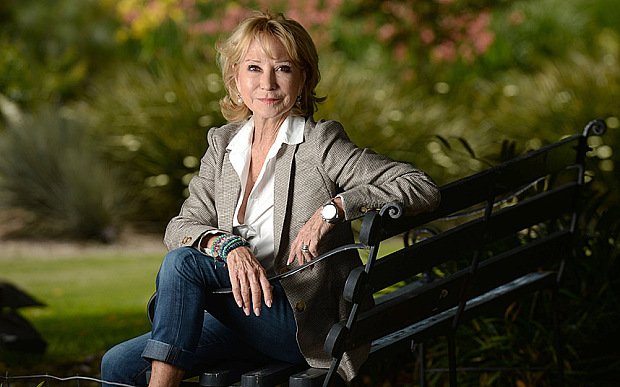
Felicity Kendal has spent decades proving that a performer does not need to chase celebrity to build an extraordinary career. For many British television viewers, she will always be Barbara Good, the warm, determined, and wonderfully practical character from the classic BBC sitcom The Good Life. Yet focusing only on that role misses much of what makes Kendal such an interesting figure. Behind one of British television’s most familiar faces is a highly experienced theatre actress whose career has stretched across comedy, drama, Shakespeare, modern plays, television mysteries, and musicals.
Born on September 25, 1946, in Warwickshire, England, Kendal grew up in circumstances very different from those of most future television stars. Much of her childhood was spent in India, where her parents operated a travelling theatre company. Acting was therefore not simply something she discovered when she became an adult. Theatre was part of everyday family life, and the stage effectively became one of her earliest classrooms.
That unusual beginning helps explain the remarkable length of her career. Kendal has remained active across generations rather than belonging to one particular era. Even in 2025 and 2026, she continued appearing in major theatre productions, including Tom Stoppard’s Indian Ink and the musical High Society. Her story is therefore not simply about a successful actress from British television’s past. It is about a performer who has continually returned to the stage, challenged herself with new material, and remained relevant for more than half a century.
Felicity Kendal’s Early Life and Unusual Childhood in India
Felicity Ann Kendal was born in Olton, Warwickshire, to Geoffrey Kendal and Laura Liddell. Both of her parents were deeply involved in theatre, and her elder sister, Jennifer Kendal, also became an actress. When Felicity was still young, the family moved through India as part of Geoffrey Kendal’s touring theatrical company. Instead of growing up around a conventional nine-to-five household, she grew up among scripts, rehearsals, costumes, actors, backstage conversations, and constant travel.
The family company performed works by writers such as William Shakespeare, George Bernard Shaw, and Richard Brinsley Sheridan for audiences across India. That environment gave Kendal something that formal acting schools often struggle to reproduce: constant exposure to live performance. She could see how actors adjusted to different audiences, how productions survived practical problems, and how discipline mattered when a company needed to perform night after night. She began appearing in productions while still extremely young and gradually took on more substantial roles.
Growing up in India also gave Kendal a cultural background quite unlike that of many British performers of her generation. Her childhood involved movement between communities, schools, theatres, and cities. Years later, she spoke about the difficulties as well as the excitement of that life. The experience appears to have given her considerable adaptability, something that became important when she moved between television fame and demanding theatre work throughout her career.
Her family’s theatrical Felicity Kendal later helped inspire Shakespeare Wallah, the 1965 Merchant Ivory film about a travelling English acting family performing Shakespeare in India. Kendal appeared in the movie as Lizzie Buckingham. The film offered an early glimpse of the qualities that would later become associated with her screen performances: naturalness, emotional openness, intelligence, and an ability to communicate without making every moment feel heavily performed.
How Felicity Kendal Became Famous Through The Good Life
Although Kendal already had theatre and screen experience, her career changed dramatically when she was cast as Barbara Good in The Good Life. The BBC sitcom began in 1975 and centred on Tom and Barbara Good, played by Richard Briers and Kendal. Tom decides to abandon conventional employment and attempt a self-sufficient lifestyle with Barbara in suburban Surbiton. Their plans repeatedly collide with the expectations of their more conventional neighbours, Jerry and Margo Leadbetter, played by Paul Eddington and Penelope Keith.
The basic idea was simple, but the chemistry between the four principal actors made the programme special. Barbara could easily have become little more than the supportive wife standing beside Tom’s eccentric experiment. Kendal gave the character much more personality. Barbara was practical, humorous, affectionate, independent, and often better equipped than Tom to deal with the consequences of their unconventional lifestyle. She was not simply following someone else’s dream. She became an active partner in creating it.
Kendal’s performance also provided a useful contrast with Penelope Keith’s Margo. Barbara was informal and willing to get muddy in the garden, while Margo represented order, social expectations, and middle-class respectability. Yet the programme did not reduce them to simple opposites. Their friendship developed because both women had strength, loyalty, and strong personalities. That balance helped The Good Life become far more enduring than a sitcom based solely on jokes about vegetables and suburban farming.
Kendal appeared Felicity Kendal the programme’s four-series run, which established her as one of Britain’s most recognisable television actresses of the 1970s. Yet The Good Life became both a gift and a potential limitation. A role that successful can permanently define an actor in the public imagination. Kendal’s later career is notable because she never allowed Barbara Good to become the only meaningful part of her professional identity.
Felicity Kendal’s Theatre Career Was Always More Important Than Many Viewers Realised
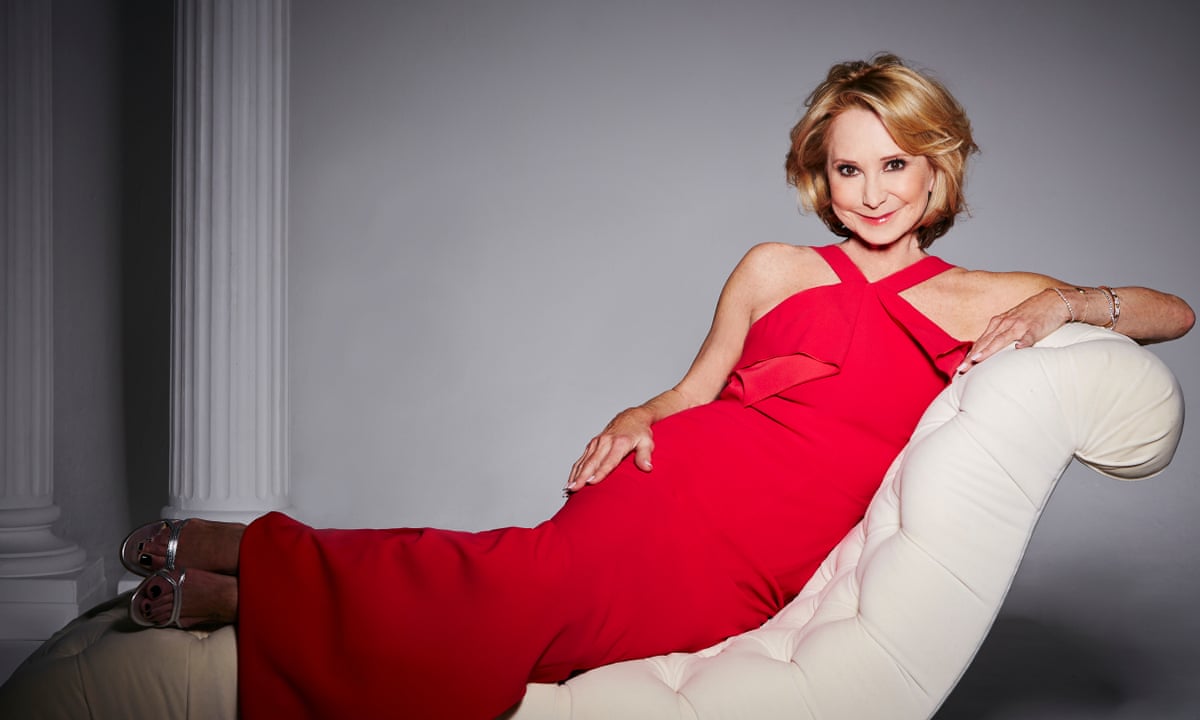
People who know Felicity Kendal mainly through television may be surprised by the scale of her theatre work. In many ways, the stage provides the clearest picture of her development as an actress. She worked on classical plays, contemporary dramas, comedies, intellectually demanding works, and major West End productions while collaborating with some of Britain’s most respected directors and playwrights.
An important stage milestone came when Kendal played Constanze Mozart in Peter Shaffer’s Amadeus in 1979, directed by Peter Hall. It began a significant professional association with Hall. She eventually appeared in numerous productions under his direction, demonstrating that her theatrical career was not a side project she pursued between television jobs. It was central to her professional identity.
Stage acting demands a different kind of discipline from television. There are no retakes, and an actor must maintain the energy and structure of a performance for an entire evening. The same production may run repeatedly for weeks or months while still needing to feel spontaneous. Kendal’s childhood in a touring theatre company gave her early familiarity with precisely that kind of working environment.
She also became Felicity Kendal with plays by major modern British writers, including Alan Ayckbourn, Michael Frayn, Simon Gray, and Tom Stoppard. That range matters. It shows that Kendal’s reputation among theatre professionals was based on more than charm or comic timing. Writers and directors repeatedly trusted her with complicated characters whose emotions could shift quickly between humour, intelligence, vulnerability, frustration, and self-awareness.
Felicity Kendal and Her Important Creative Partnership With Tom Stoppard
One of the most significant chapters in Felicity Kendal’s theatre career involved playwright Tom Stoppard. Kendal appeared in original productions of several of his plays, including On the Razzle, The Real Thing, Hapgood, and Arcadia. These were not minor projects. Stoppard became one of the most celebrated playwrights of modern British theatre, known for combining sophisticated ideas with humour, language, philosophy, history, and complicated dramatic structures.
Kendal’s ability to handle that material helped challenge the simplified image audiences may have formed from The Good Life. Stoppard’s female characters could demand speed, precision, emotional intelligence, and a strong understanding of language. In Hapgood, for example, Kendal took on an especially complex central character, while Arcadia placed her inside one of Stoppard’s most admired intellectual dramas. These performances strengthened her standing as a serious stage actress.
Their professional relationship was accompanied for several years by a personal relationship, but Kendal’s importance to Stoppard’s theatre should not be reduced to that connection. She was an accomplished performer collaborating with a playwright whose writing required exceptional technical skill. Her continued association with his work across several decades illustrates the artistic compatibility between actor and writer.
Perhaps the most meaningful example is Indian Ink. Kendal originated the role of Flora Crewe when the play received its major stage production in 1995. Thirty years later, she returned to the same play in a completely different role, playing Flora’s sister, Mrs Swan, in a Hampstead Theatre revival. The production ran from December 2025 into February 2026 after its run was extended because of demand. Few acting careers offer such a striking opportunity to revisit the same dramatic world from a different generation’s perspective.
Felicity Kendal’s Television Career Beyond The Good Life
Although The Good Life remains her most famous television achievement, Felicity Kendal continued taking television roles after the programme ended. Her later work demonstrated her willingness to move between formats rather than endlessly attempting to reproduce Barbara Good. Among her television projects were Solo, The Mistress, The Camomile Lawn, and other dramas and comedies.
One of her best-known later television successes arrived with Rosemary & Thyme, which began in 2003. Kendal starred alongside Pam Ferris in the light mystery drama, which combined gardening with crime-solving. Kendal played Rosemary Boxer, while Ferris played Laura Thyme. The unusual mixture of attractive gardens, character-driven humour, friendship, and murder mysteries created a distinctive series that found an audience both in Britain and internationally.
The programme introduced Kendal to viewers who may not have grown up watching The Good Life. That is an important feature of longevity in television. An actor can be enormously famous to one generation and almost unknown to the next unless new work creates another point of entry. Rosemary & Thyme gave Kendal that opportunity and showed that her relaxed screen presence continued to work decades after her first major sitcom success.
She also appeared in entertainment Felicity Kendal outside traditional acting. In 2010, Kendal competed on Strictly Come Dancing, bringing her to another large television audience. By that stage, she had already spent decades in the public eye. Her participation reflected a willingness to try unfamiliar formats without abandoning the theatre work that remained at the centre of her professional life.
Felicity Kendal’s Personal Life, Family, and Identity
Kendal’s personal life has occasionally attracted substantial media attention, although she has generally maintained a career defined more by acting than celebrity culture. Her first marriage was to actor Drewe Henley. She later married theatre director Michael Rudman, with whom she had a long and complicated relationship that ultimately extended across several decades. Kendal has two sons.
Kendal and Rudman’s marriage ended, and she later had a relationship with Tom Stoppard. However, she and Rudman eventually reunited without remarrying and remained partners until his death in March 2023. In later interviews, Kendal spoke openly about adjusting to his death and the strange everyday moments in which grief could suddenly become noticeable. Her comments were characteristic of the practical manner audiences have often associated with her, though she was also clear about the depth of the loss.
Religion has also become an important part of Kendal’s personal identity. She was raised Catholic but later converted to Judaism after a lengthy period of study. Kendal has explained that the decision was not simply connected to Rudman’s Jewish background. Instead, she described it as something she had been drawn toward personally, influenced partly by the multicultural environment in which she had grown up.
Family has remained another significant element of her life. Kendal has often discussed the importance of extended family relationships rather than presenting her career as something Felicity Kendal from home life. That perspective makes sense considering her upbringing. For Kendal, family Felicity Kendal theatre were intertwined almost from the beginning, because the people raising her were also the people producing, rehearsing, and performing plays around her.
Felicity Kendal’s Awards, Recognition, and Reputation
A career lasting as long as Kendal’s inevitably produces a large amount of recognition, but one of her most significant official honours came when she was appointed Commander of the Order of the British Empire (CBE) in the 1995 New Year Honours for services to drama. The honour reflected the breadth of a career that had already included major television success and substantial theatrical achievement.
Yet awards alone do not explain her reputation. Kendal’s greater achievement may be the unusual balance she has maintained between mass popularity and theatrical credibility. Some performers become household names through television but struggle to establish themselves seriously on stage. Others earn enormous respect in theatre without ever becoming familiar faces to mainstream audiences. Kendal managed both.
Her public image has also changed as she has aged. Early Felicity Kendal frequently emphasised her youthful appearance and charm. Over time, however, the longevity of her career has increasingly brought attention to her professionalism and range. An actress once closely identified with a cheerful television character eventually became a senior stage performer capable of carrying productions by writers such as Stoppard, Shaffer, Ayckbourn, and Frayn.
That evolution is important when assessing Felicity Kendal legacy. Her career shows why an actor should not necessarily be judged by the role that generates the most publicity. Popularity can open doors, but maintaining a profession for decades requires craft, discipline, resilience, and the willingness to keep learning.
Felicity Kendal’s Recent Work Proves She Has Never Really Retired
One of the most impressive aspects of Felicity Kendal’s story is that her career continued well beyond the period when many performers would have chosen to slow down. She took her first major musical role in her seventies when she appeared as Evangeline Harcourt in the London revival of Anything Goes in 2021. Two years later, she appeared as Dotty Otley in Michael Frayn’s famously complicated backstage comedy Noises Off.
The 2025 revival of Indian Ink offered another reminder of her longevity. Thirty years after creating Flora Crewe, Kendal returned as Mrs Swan in Jonathan Kent’s production at Hampstead Felicity Kendal . The production originally opened in December 2025 and was later extended through February 7, 2026. For an actor to return to the same play three decades later, playing an older generation within the story, created an unusual connection between theatrical history and the present.
Kendal continued working in 2026 with Cole Porter’s High Society. At the Barbican in London, she played Mother Lord alongside a cast that included Helen George, Freddie Fox, Julian Ovenden, Nigel Lindsay, Carly Mercedes Dyer, and Malcolm Sinclair. The Barbican production ran from May 19 to July 11, 2026, before the wider production continued touring.
That makes the word “veteran” slightly misleading when applied to Kendal. It correctly describes her experience, but it can make an actor sound as though their important work belongs entirely to the past. Kendal’s career has operated differently. She has carried her experience into new productions rather than simply appearing at anniversary events celebrating old ones.
Why Felicity Kendal Remains Such an Important British Actress
Felicity Kendal’s lasting appeal begins with something surprisingly difficult for actors to achieve: she often appears completely natural. Her characters can feel conversational even when the writing is technically demanding. She does not always signal every emotional change to the audience. Instead, humour and feeling often emerge through rhythm, timing, small reactions, and understated delivery.
Her versatility is equally important. The distance between Barbara Good and a character in a Tom Stoppard play is considerable. One belongs to an accessible mainstream television comedy, while the other may require an actor to negotiate philosophical ideas, linguistic puzzles, historical references, and complicated emotional relationships. Kendal has moved between those worlds without abandoning either one.
There is also something unusual about the structure of her career. She did not follow the now-familiar path from drama school to small television roles, major series, films, and eventual Felicity Kendal . She effectively began inside a travelling theatre culture as a child. Her professional identity developed through performance before television made her famous. That background may help explain why she repeatedly returned to theatre even after becoming a household name.
Most importantly, she survived Felicity Kendal being associated with an enormously successful character. Barbara Good could easily have overshadowed everything that followed. Instead, Kendal turned one defining role into a starting point for decades of additional work. The audience may have remembered Barbara, but directors continued seeing Felicity Kendal.
The Enduring Legacy of Felicity Kendal
When discussing Felicity Kendal, it is tempting to begin and end with nostalgia. The Good Life occupies an important place in British television history, and Barbara Good remains one of Kendal’s most loved characters. However, nostalgia alone does not explain why she has remained professionally important for so long.
Her real legacy lies in continuity. She moved from childhood performances in her family’s travelling company to film, West End theatre, one of Britain’s best-loved sitcoms, sophisticated contemporary drama, popular television mysteries, musicals, and major theatrical revivals. Rather than reinventing herself through dramatic publicity campaigns, she simply continued working.
That consistency also makes Kendal an interesting example of what a sustainable acting career can look like. Fame arrived, changed form, and occasionally faded from the centre of popular Felicity Kendal , but the work continued. She remained connected to writers, directors, theatres, and audiences rather than depending entirely on television celebrity.
As she approached her 80th birthday in Felicity Kendal 2026, Kendal could look back on an extraordinary professional journey while still having recent stage credits rather than merely historical ones. Her continuing involvement in productions such as Indian Ink and High Society demonstrates something particularly fitting about her career: theatre was there at the beginning, and decades later, theatre remains at its heart.
Conclusion
Felicity Kendal’s career is far richer than the label “star of The Good Life” suggests. That beloved sitcom gave her nationwide recognition, but it represents only one chapter in a life shaped by theatre from childhood. Growing up in India with a travelling acting family gave her an unconventional education, while decades of work with respected playwrights and directors allowed her to develop into one of Britain’s most experienced stage performers.
Her career also demonstrates how performers can outgrow the roles that first make them famous without rejecting them. Kendal has always remained connected to Felicity Kendal Good in the public imagination, yet she built an impressive body of work alongside that legacy. From Amadeus and Arcadia to Rosemary & Thyme, Indian Ink, Noises Off, and High Society, she has repeatedly moved into new creative territory.