
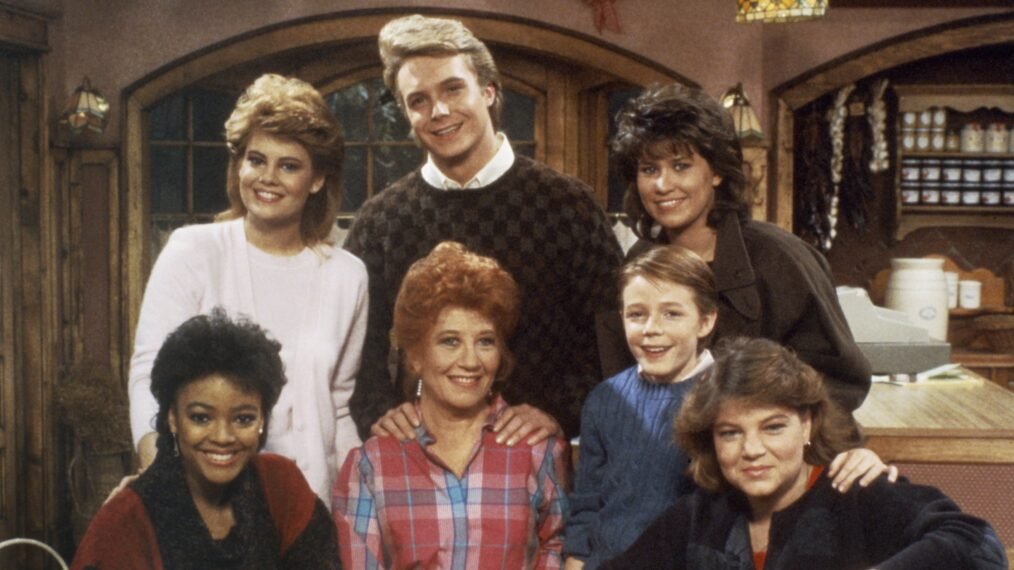
Ryan Cassidy belongs to one of the most recognizable entertainment families in American pop culture, yet his own career has followed a noticeably different path. As the youngest son of Academy Award-winning actress Shirley Jones and Tony Award-winning actor Jack Cassidy, Ryan grew up surrounded by television sets, movie stars, musicians, and performers. His brothers David, Shaun, and Patrick Cassidy all developed highly visible careers, making fame almost an ordinary part of family life. Ryan, however, gradually discovered that he was just as interested in what happened behind the camera as what happened in front of it.
That distinction has shaped Ryan Cassidy’s story. While he did pursue acting and appeared in television during his younger years, he eventually established himself primarily through production work, particularly within art and set-decoration departments. Instead of chasing celebrity status, he learned how television environments are physically created, dressed, and transformed to support characters and stories. His credits and interviews reveal someone who appreciates entertainment as a craft rather than simply as a route to public recognition.
In more recent years, Cassidy has also stepped into another creative role: author. His children’s book James Cagney Was My Babysitter transformed an unusual memory from his childhood into a personal story about imagination, kindness, and connection. Taken together, his acting experiences, production career, family background, and writing show that Ryan Cassidy’s life is not merely an extension of the famous Cassidy name. It is a career built around finding his own place within a world he knew almost from birth.
Who Is Ryan Cassidy?
Ryan Cassidy is an American entertainment professional, former actor, set dresser, and author who is best known publicly as a member of the Cassidy entertainment family. He is the youngest child of actress and singer Shirley Jones and actor Jack Cassidy. Through his father, he is also the younger half-brother of David Cassidy, while Shaun Cassidy and Patrick Cassidy are his full brothers. Every one of the Cassidy brothers became involved in entertainment, though each ultimately developed a different professional identity.
Ryan was born in 1966 and grew up during a particularly eventful era for his family. By the time he was old enough to understand celebrity culture, his mother was already an established film and musical star, while David Cassidy was becoming one of the biggest teen idols of the early 1970s. Shaun would later experience his own period of teen-idol fame, while Patrick developed a substantial acting and musical-theatre career. Ryan therefore entered adulthood with an unusually close view of both the opportunities and pressures connected with the entertainment business. In February 2025, he discussed being 59 and reflected openly on the different direction his own career had taken.
What makes Ryan Cassidy interesting is that he never appears to have treated his family’s fame as something he had to duplicate. He has acknowledged being proud of the Cassidys while also emphasizing his own identity. That attitude helps explain why he became comfortable working in areas of production where craftsmanship is more important than celebrity. His career suggests an understanding that entertainment depends on thousands of talented people whose names may never appear in giant letters on posters.
Growing Up in the Famous Cassidy Family
Ryan Cassidy’s childhood was anything but typical from an outsider’s perspective. His mother, Shirley Jones, had already built an extraordinary résumé through musical films and dramatic performances. She starred in classics such as Oklahoma! and Carousel and won an Academy Award for her dramatic performance in Elmer Gantry. Later, she became familiar to an entirely new generation as Shirley Partridge in The Partridge Family. Ryan’s father, Jack Cassidy, was an accomplished stage and television performer whose career included major Broadway success.
At home, however, the family tried to maintain some sense of normality. Ryan has explained that his mother brought small-town values into their household and did not behave as though being a movie star made her fundamentally different from everyone else. That attitude mattered because fame was constantly present around them. Tourists sometimes slowed down outside the family’s home, and strangers approached Shirley Jones or the Cassidy brothers for autographs when the family went out together. What would have seemed extraordinary to most children eventually became ordinary background noise for Ryan.
The family Ryan Cassidy also gave him several different models of what an entertainment career could look like. David experienced enormous pop stardom, Shaun combined music and acting before becoming a successful writer and producer, and Patrick pursued acting and musical theatre. Ryan was the youngest and has recalled that his older brothers were protective of him, particularly because they understood how complicated show business could become. Rather than pushing him toward their own careers, they wanted him to avoid some of the difficulties they had already encountered.
Ryan Cassidy and The Partridge Family Connection
Ryan Cassidy was not a regular cast member of The Partridge Family, but the series still played an important role in his childhood. The ABC sitcom aired from 1970 to 1974 and starred Shirley Jones alongside David Cassidy. Its fictional musical family became a pop-culture phenomenon, and David’s role as Keith Partridge helped transform him into an international teen idol. For Ryan, though, this cultural landmark was also simply a place where his mother and brother went to work.
Ryan spent considerable time visiting the show’s set. He has remembered being fascinated by the famous multicolored Partridge Family bus and pretending to drive it when he was young. That detail captures something important about his relationship with Hollywood. While millions of viewers saw the bus as television memorabilia, Ryan encountered it as a child exploring a workplace. Production environments were therefore familiar to him long before he eventually made a career working on sets himself.
He also watched his mother and David working during production, providing an early education in how television actually operates. The cameras may have attracted the audience’s attention, but Ryan could also observe the sets, crews, equipment, and repetitive work required to create an episode. Looking back, his childhood visits to The Partridge Family can almost be viewed as an informal introduction to television production. Decades later, his decision to work within set decoration made those childhood experiences seem unexpectedly relevant.
Ryan Cassidy’s Early Interest in Acting
Given his family background, acting was an obvious career possibility for Ryan Cassidy. Unlike singing, which he has said never strongly attracted him as a profession, acting genuinely interested him. That distinction separated him somewhat from David and Shaun, whose careers became strongly associated with popular music as well as television. Ryan was willing to perform, but he did not feel obligated to become another Cassidy recording star.
His acting work included an appearance on the popular sitcom The Facts of Life. He also appeared in Lionel Richie’s music video for “Penny Lover,” another reminder that Ryan did spend time in front of the camera before his production career took priority. People magazine’s overview of Jack Cassidy’s children notes both of these early performing credits while emphasizing that Ryan eventually became much more closely associated with behind-the-scenes work.
Interestingly, Ryan has not completely dismissed the possibility of acting again. In a 2025 interview, he said that acting still occasionally appeals to him and suggested that age and life experience could actually give him more to draw upon as a performer. That does not necessarily mean a major acting comeback is planned, but it illustrates his continuing affection for the craft. His relationship with acting appears relaxed rather than obsessive: it is something he has enjoyed, not something he believes must define him.
Why Ryan Cassidy Chose Life Behind the Camera
Ryan Cassidy eventually found a professional environment that suited him particularly well: the visual and physical creation of television sets. Working behind the scenes allowed him to remain inside the entertainment industry while developing an identity separate from the public careers of his parents and brothers. Instead of being evaluated according to ticket sales, ratings, or celebrity attention, he could concentrate on the practical craft of helping build believable environments.
This choice should not be mistaken for leaving show business. Set decoration is an essential part of film and television storytelling. A character’s apartment, workplace, bedroom, garage, or office communicates information before the character even speaks. Furniture, lamps, wall decorations, books, tools, colors, and seemingly insignificant objects help establish personality and history. Ryan has explained that the larger art department coordinates many of these visual decisions, while a set dresser physically helps arrange and prepare the environment according to the production’s creative direction.
The profession seems Ryan Cassidy appropriate given Ryan’s interest in design and older visual styles. In a 2025 interview with The Spill Magazine, he discussed his affection for 1930s Art Deco and spaces with warmth and character. He described set work as both enjoyable and challenging because production crews may create a detailed environment under strict deadlines only to dismantle it shortly afterward. That temporary nature is one of the fascinating contradictions of set decoration: enormous care can go into creating a room that may exist for only a few scenes.
Ryan Cassidy’s Work as a Set Dresser
Ryan Cassidy has spent years developing experience inside television art and decoration departments. His work involves far more than placing random furniture around a studio. Set dressers must understand what the production designer and set decorator are trying to communicate visually. They help install and arrange objects so that the final environment looks natural on camera while remaining practical for actors, directors, lighting teams, and camera crews.
One of Ryan’s notable television associations is The King of Queens, the long-running CBS sitcom starring Kevin James, Leah Remini, and Jerry Stiller. When discussing his experience on the series, Cassidy explained how character identity influenced decoration decisions. A set is not simply supposed to look attractive; it should look as though the fictional character actually lives there. A garage associated with Jerry Stiller’s character, for example, offered opportunities to fill the environment with objects that made the space feel personal, cluttered, funny, and believable.
Ryan has also been credited with art-department work on other entertainment projects. People noted his behind-the-scenes involvement with productions including The King of Queens and Bill Nye’s MasterClass project. Across almost three decades of set-related work, he has developed a professional identity that has relatively little to do with being famous. In many ways, this is the strongest evidence that Ryan Cassidy established a career on his own terms: production crews ultimately depend on reliability, technical experience, creativity, and teamwork rather than a recognizable surname.
The Creative Side of Ryan Cassidy
Ryan Cassidy’s career makes more sense when viewed through his wider interest in visual creativity. His enthusiasm for design extends beyond television studios. He has spoken about interior spaces as places that should have personality and warmth, expressing particular appreciation for vintage aesthetics. That sensitivity to atmosphere is exactly what a successful set dresser needs because production design is often about creating emotional information through objects and space.
His childhood also appears to have encouraged imagination. Ryan has described himself as a quiet child with a vivid inner world. Growing up around actors and storytellers may have reinforced that creativity, but he also seems to have been interested in details that other children might have ignored. This became particularly important during his childhood encounter with James Cagney, when the legendary actor responded to Ryan’s interest in fantasy and drawing rather than simply entertaining him with stories about Hollywood.
That combination of visual imagination and practical craftsmanship separates Ryan’s creative personality from the more performance-centered careers of Ryan Cassidy other Cassidy family members. He did not reject creativity; he redirected it. Sets, interiors, props, and eventually children’s literature became different ways of doing what performers also do: creating a world convincing enough that someone else can temporarily enter it.
The Day James Cagney Became Ryan Cassidy’s Babysitter
One of the most remarkable stories associated with Ryan Cassidy happened when he was only seven years old. His parents were going through a separation at the time, and Ryan was accompanying his father when circumstances led them to the home of legendary actor James Cagney. When Jack Cassidy needed to leave to collect Ryan’s brother Patrick, Cagney offered to watch Ryan until his father returned. What could have been an ordinary afternoon became a memory Ryan carried for decades.
Ryan did not fully understand Cagney’s legendary Hollywood status at that age. Instead, he encountered him simply as an older man who took a genuine interest in what a seven-year-old boy was thinking. Ryan later remembered the imaginative decorations inside Cagney’s house and the actor’s interest in drawing. Cagney created a fantasy-themed drawing for him and personally signed it. Ryan preserved the artwork, and years later he still displayed it in his home.
The lasting impact of Ryan Cassidy experience was not that Ryan had spent several hours with an Academy Award-winning movie star. What mattered was the attention Cagney gave him. Ryan has explained that Cagney made him feel comfortable and important during a complicated period in his family life. Rather than dominating the afternoon with stories about his own fame, the older actor focused on the child’s interests and imagination. That emotional lesson eventually became the foundation for one of Ryan’s most personal creative projects.
James Cagney Was My Babysitter
Decades after that childhood afternoon, Ryan Cassidy turned the experience into the children’s book James Cagney Was My Babysitter. Published in 2023, the book grew from a story Ryan had told people over the years. Friends and acquaintances frequently commented that someone raised in such an unusual Hollywood family must have accumulated countless stories. Among those memories, his afternoon with Cagney continued to stand out.
Ryan developed the book with writer Johnny Ray Miller, who had already written about The Partridge Family. According to Cassidy’s later account, the idea eventually reached a publisher and developed into a project that could introduce the story to readers who might know little or nothing about classic Hollywood. That was important because the emotional core of the book does not require readers to understand Cagney’s film career. At heart, it is about the unexpected friendship between an older adult and a child.
Shirley Jones Ryan Cassidy to the project as well, providing a foreword and afterword. Her participation gives the book another layer of family history because she personally knew and worked with Cagney. The project therefore connects several generations and several parts of Hollywood history: Cagney’s golden-age career, Shirley Jones’s era of film musicals, the Cassidy family’s television fame, and Ryan’s own childhood memories. The book was released on March 14, 2023.
Ryan Cassidy’s Relationship With His Mother, Shirley Jones
Shirley Jones has clearly had a major influence on Ryan Cassidy’s understanding of fame, family, and work. Despite her substantial achievements, Ryan has consistently described her as grounded and uncomplicated in everyday life. She wanted her children to be happy rather than forcing them into any particular profession. Ryan recalled that she would have supported them even if they had chosen ordinary jobs far removed from the entertainment industry.
That kind of parental support may have made it easier for Ryan to move away from the obvious path of becoming a singer or full-time actor. In a family where entertainment success was almost expected from the outside, having a parent who did not define success only through fame would have mattered. Ryan could explore acting without believing he had failed when his interests shifted toward set decoration and production.
The Cassidy brothers have continued publicly celebrating their mother as she has grown older. When Shirley Jones turned 90 on March 31 Ryan Cassidy joined Shaun and Patrick for a family celebration that included children and extended relatives. The event reflected a theme that appears repeatedly in accounts of the Cassidy family: despite decades of careers, publicity, personal changes, and loss, family relationships have remained an important part of their shared identity.
Ryan Cassidy and His Famous Brothers
Being the younger brother of David, Shaun, and Patrick Cassidy could easily have made comparison unavoidable. David became a defining pop-culture figure of the 1970s through The Partridge Family and his music career. Shaun Cassidy also experienced enormous teen-idol success before eventually moving into television writing and production. Patrick Cassidy built his reputation through acting and musical theatre. Ryan’s professional route was quieter but remained firmly connected to entertainment.
Ryan has said that he never felt particularly competitive with his brothers, partly because of the age differences between them. Instead, he remembers them as protective. They had already experienced some of the more complicated sides of show business and wanted their youngest brother to avoid being exploited. That relationship gave Ryan access not only to their successes but also to lessons learned from the difficult realities behind public fame.
David’s death in 2017 inevitably changed the family, but the Cassidy name continues through several generations involved in acting and music. Ryan’s position within that legacy is distinctive. He represents the side of entertainment that audiences rarely celebrate: the crews who construct the visual world surrounding performers. His career therefore expands the Cassidy family’s entertainment story rather than merely repeating it.
Ryan Cassidy’s Personal Life
Although Ryan Cassidy comes from a famous family, he has kept much of his personal life relatively private. He is married to Bonnie Cassidy, and the couple have a daughter, Meghan Mae. Unlike celebrity families that regularly document every detail of domestic life, Ryan has generally allowed his professional work and occasional family appearances to provide the main public view into his world.
That privacy fits his broader personality and career. Someone who chooses production work over celebrity-centered opportunities is naturally less visible to entertainment media. Ryan participates in interviews, events, book appearances, and family celebrations, but he has not built his identity around constant public exposure. This has allowed him to remain connected with Hollywood while maintaining a degree of normality that can be difficult for members of famous entertainment families.
Fatherhood may also provide another reason his children’s book feels especially personal. Rather than publishing a conventional celebrity memoir filled primarily with famous names, Ryan chose to tell a childhood story with an emotional lesson that younger readers could understand. That choice is consistent with the way he talks about his own childhood: the important part was never merely that James Cagney was famous, but that an adult took time to make a child feel noticed.
Ryan Cassidy’s Approach to Fame and Individual Identity
Perhaps the most revealing aspect of Ryan Cassidy’s public comments is his determination to remain an individual within a famous family. He has openly expressed pride in being a Cassidy while also stressing that he is his own person. That may sound obvious, but maintaining a separate identity can be difficult when a person’s parents and siblings have already become household names.
For Ryan, independence seems to have come through work. Spending years in production departments allowed him to develop skills that had nothing to do with being Jack Cassidy’s son or David Cassidy’s brother. On a television set, furniture still has to arrive on time, objects must work visually, spaces must match the production designer’s vision, and crews must meet demanding schedules. A recognizable surname cannot replace practical competence.
His experience provides an interesting alternative to the usual celebrity-family narrative. Success does not always mean becoming more famous than the previous generation. Sometimes it means finding the area where your abilities make the most sense. Ryan stayed in the same broad industry as his family, but he changed his relationship with that industry. Rather than living primarily under the spotlight, he became one of the people helping construct what audiences see inside it.
Ryan Cassidy’s Legacy in Entertainment
Ryan Cassidy’s legacy is still developing, but his career already demonstrates considerable versatility. He has experienced entertainment as the child of famous performers, as an aspiring actor, as someone working inside television production, and as an author reflecting on Hollywood history. Few people have viewed the industry from so many different angles. His life connects the golden age of Hollywood with classic 1970s television and modern production work.
His set-decoration career deserves particular recognition because it highlights an often-overlooked side of filmmaking. Audiences naturally focus on actors, but production design quietly influences almost every scene. A believable environment helps performers inhabit their characters and gives viewers visual information without requiring dialogue. Ryan’s decades of work in this area show that his contribution to entertainment is practical as well as personal.
At the same time, James Cagney Was My Babysitter has allowed him to preserve a small but meaningful piece of Hollywood history. Instead of describing Cagney primarily as an icon, Ryan remembers him as a compassionate human being who gave his attention to a child. That approach says something about Ryan’s own values as well. Fame may surround his story, but human connection repeatedly appears to matter more.
Why Ryan Cassidy’s Story Still Attracts Interest
Part of the fascination with Ryan Cassidy comes from the extraordinary family surrounding him. Fans of The Partridge Family, David Cassidy, Shaun Cassidy, Shirley Jones, classic Hollywood, and vintage television naturally become curious about the youngest member of the family. Ryan provides another perspective on a dynasty that has influenced American entertainment for several generations.
Yet his story becomes more interesting once the family connections are placed in the background. Ryan represents the countless entertainment professionals who discover that their strongest contribution may happen away from the camera. He understood the attraction of performing because he had experienced it himself, but he also recognized the satisfaction of creating spaces where other performers could work. That ability to change direction is arguably one of the defining features of his career.
His later emergence as an author adds another dimension. Instead of attempting to capitalize on every famous person he encountered as a child, Ryan selected one quiet afternoon and explored why it stayed with him. That restraint makes the story more memorable. The remarkable detail is that James Cagney once watched him for several hours, but the meaningful detail is that Cagney made a seven-year-old child feel heard.
Conclusion
Ryan Cassidy may have been born into Hollywood royalty, but his career demonstrates that family legacy does not have to determine personal direction. As the youngest son of Shirley Jones and Jack Cassidy and the brother of David, Shaun, and Patrick Cassidy, he entered life surrounded by performers whose success could easily have overshadowed his own choices. Instead, he gradually created a professional identity that suited his interests.
His journey from early acting experiences to decades of behind-the-scenes production work reveals someone more interested in the craft of entertainment than the status attached to it. Through set dressing and art-department work, Ryan helped create the environments audiences saw on television. His appreciation for design, vintage aesthetics, visual storytelling, and character-driven spaces gave him a creative outlet separate from the singing and acting traditions associated with much of his family.
His book James Cagney Was My Babysitter brought that journey full circle. A childhood memory involving one of Hollywood’s legendary performers became an opportunity to preserve a lesson about imagination, generosity, and human connection. That may ultimately be what makes Ryan Cassidy’s story stand apart. He inherited one of entertainment’s most recognizable surnames, but instead of simply living through the Cassidy legacy, he found his own way to contribute to it.