
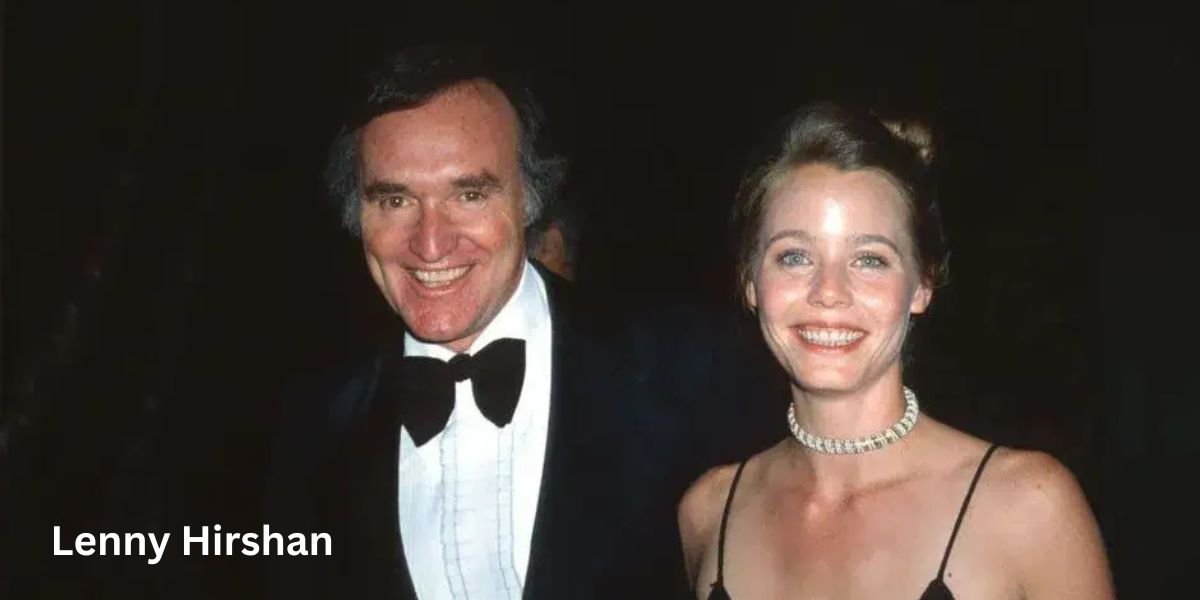
Lenny Hirshan, whose real name is Leonard Hirshan, was an accomplished Hollywood talent agent and manager who was revered not only for his presence within the industry. Unlike most actors and directors who earned their fame all around the world, Lenny Hirshan made his reputation through his career guidance, his relationships, and his devotion to creative professionals. Most renowned for being a long-term agent of the well-known Clint Eastwood, Lenny became widely known as the man of devotion and loyalty in the entertainment industry.
Born in New York City on December 27, 1927, Hirshan entered show business through a route that became almost legendary in the traditional agency system: the mailroom. He joined the William Morris Agency’s New York office in 1951 when he was 23 and gradually worked his way into increasingly important positions. His career eventually placed him alongside some of the most recognizable actors of the twentieth century. According to reporting published after his death, his client relationships included Eastwood, Walter Matthau, Jack Lemmon, Angela Lansbury, and Sophia Loren, while he was also involved in deals connected with performers such as Elvis Presley.
What makes the story of Lenny Hirshan interesting today is not simply the number of famous people associated with him. His career provides a useful window into an older model of Hollywood representation, when successful agents could remain connected to major clients for decades. Hirshan’s professional life was built around relationships rather than constant publicity. His approach shows how trust, career judgment, negotiation, and personal accessibility can become as important as simply finding the next job. For people curious about Hollywood history, talent management, Clint Eastwood’s career, or even Hirshan’s former marriage to actress Susan Dey, his life offers much more to explore than his relatively low public profile might suggest.
Lenny Hirshan’s Early Life and Entry Into the Entertainment Industry
Lenny Hirshan was born on December 27, 1927, in New York City. Before entering the entertainment business, he spent two years serving in the U.S. Navy and later completed an undergraduate degree at New York University. Although his eventual career would revolve around major movie stars and high-level Hollywood negotiations, he did not begin with celebrity connections or an executive title. His interest in theatre and show business instead led him toward one of America’s most important talent agencies.
His introduction to William Morris reportedly came through advice from his uncle Lou, a successful lawyer. The suggestion was straightforward: if Hirshan wanted to understand show business, he should begin at the bottom. He followed that advice and joined the William Morris Agency mailroom in New York in 1951. At the time, agency mailrooms served as training grounds where ambitious young employees learned how the entertainment industry operated while developing relationships throughout the company. Hirshan’s progress from that entry-level environment to senior representation illustrates how deeply he came to understand the business.
He did not remain in the mailroom for long. Hirshan became involved in significant negotiations relatively early in his agency career. The Los Angeles Times reported that he helped negotiate the contract for Eva Marie Saint’s first feature film, On the Waterfront, released in 1954. He also helped negotiate a studio agreement involving Jack Lemmon, an accomplishment that contributed to William Morris moving him to Los Angeles to concentrate on motion pictures. That move was important because Hollywood was becoming the center of Hirshan’s professional life, and film representation would ultimately define his reputation.
Lenny Hirshan background also helps explain the style that later became associated with him. He learned agency work during a period when representatives were expected to know their clients closely and understand the broader machinery of studios, producers, scripts, contracts, and career development. Rather than becoming famous himself, he became valuable because he understood how those pieces connected. By the time he became established in Los Angeles, he had developed the combination of institutional experience and personal relationship-building that would carry him through decades of change in Hollywood.
Lenny Hirshan and the William Morris Agency
For most of Lenny Hirshan’s professional career, the William Morris Agency was his institutional home. William Morris was one of Hollywood’s most established talent agencies, and working there placed Hirshan in the middle of major negotiations, casting discussions, studio relationships, and career decisions. Over the years, he became closely associated with a roster of important performers and developed a reputation for taking unusually careful interest in what his clients did next.
Reports on the agency business from the period identify Hirshan with clients including Clint Eastwood, Walter Matthau, and Jack Lemmon. Other accounts of his career also mention Angela Lansbury and Sophia Loren. The importance of such a client list is not simply that the names were famous. Representing established actors required dealing with enormous financial stakes, complicated schedules, studio executives, producers, directors, lawyers, and competing projects. A good agent had to understand when to negotiate aggressively and when rejecting a seemingly attractive opportunity might protect a client’s long-term career.
Hirshan eventually rose to a major leadership position inside William Morris. Following the death of influential motion-picture department leader Stan Kamen in 1986, Hirshan took over leadership of the department. He remained in that position for roughly a year before stepping down, during a period when the traditional agency business was being challenged by increasingly aggressive competitors and changing attitudes among younger talent. Although the industry was becoming more competitive and clients were Lenny Hirshan between agencies more frequently, Hirshan remained with William Morris for years afterward.
One notable characteristic of Lenny Hirshan career was his willingness to adapt. As movie packaging became more significant, agents increasingly had to coordinate multiple clients and creative components connected to the same project. Former colleagues later recalled that Hirshan managed this complicated type of representation quietly and effectively. His success was therefore not based only on the old Hollywood model. He was able to function while the economics and culture of representation were evolving around him.
Lenny Hirshan and Clint Eastwood: A Remarkable Hollywood Partnership
Any serious discussion of Lenny Hirshan eventually leads to Clint Eastwood. Their professional relationship lasted for more than 50 years and became one of the defining partnerships of Hirshan’s career. Eastwood said Hirshan became his agent around the period when the actor was working on Westerns in Europe with director Sergio Leone. Their association therefore stretched across much of Eastwood’s development from television and Western performer to internationally recognized movie star, director, and producer.
The durability of their relationship is especially striking when viewed against normal Hollywood practice. Actors frequently change representatives after disappointing projects, career transitions, or disagreements over strategy. In a 1997 examination of loyalty between Hollywood stars and agents, the Los Angeles Times pointed to Eastwood and Hirshan as an example of a relationship that had already survived for decades. Another industry report in 1996 described Eastwood as having been with Hirshan for roughly 35 years at that point.
Their partnership appears to have gone well beyond contract negotiation. Eastwood recalled after Hirshan’s death that his agent was willing to tell him when he believed he was making a mistake. That detail reveals something important about successful representation. A representative who simply agrees with every decision might maintain a pleasant relationship, but someone responsible for protecting a long career occasionally needs to challenge the client. Hirshan seems to have earned enough trust to offer that type of advice without damaging their partnership.
There are also concrete examples of Hirshan’s involvement in Eastwood’s career choices. Interviews collected from Eastwood’s earlier career show him describing Hirshan bringing him a writer connected with the development of Any Which Way You Can. Separately, accounts of In the Line of Fire document Hirshan contacting the production side after Eastwood became interested in the script, helping move the project toward a deal. These episodes illustrate an agent doing more than negotiating compensation after a project already existed; Hirshan could serve as a bridge connecting talent, material, producers, and opportunities.
Eastwood publicly acknowledged Hirshan as well. When accepting an Academy Award, Eastwood specifically thanked “Lenny Hirshan, my agent,” providing a small but telling example of how visible the relationship could become even though Hirshan usually remained behind the scenes. After Lenny Hirshan death, Eastwood described him not only as his agent of more than 50 years but also as a personal friend. That distinction is central to understanding why the relationship endured.
The Other Major Stars Represented by Lenny Hirshan
Although Clint Eastwood understandably dominates discussions about Lenny Hirshan, focusing exclusively on Eastwood understates the scale of Lenny Hirshan career. His professional history intersected with several major Hollywood performers, including Jack Lemmon and Walter Matthau. These were not minor industry figures. Both men built substantial film careers, and their association with Hirshan demonstrates the level at which he operated within the agency world.
Walter Matthau’s relationship with Hirshan was particularly significant. The official history maintained by the Matthau organization identifies Hirshan as Matthau’s longtime agent. When Charlie Matthau began managing his father around 1990, he worked alongside Hirshan. During the following years, Walter Matthau’s career included films such as Dennis the Menace and Grumpy Old Men. The arrangement shows Hirshan functioning as part of a broader professional team rather than insisting on controlling every aspect of a client’s business himself.
His connection with Jack Lemmon also reached back to an earlier point in his career. Hirshan’s work on a studio deal involving Lemmon reportedly helped lead to his transfer from William Morris’s New York operation to Los Angeles, where he focused more heavily on motion pictures. That detail makes Lemmon important not only as another well-known client but also as part of Hirshan’s own professional development.
Hirshan could also become involved when existing clients recommended emerging performers. A 1987 Los Angeles Times profile reported that Clint Eastwood encouraged Lenny Hirshan to represent Mario Van Peebles after working with him on Heartbreak Ridge. This suggests that Hirshan’s network grew partly through confidence from the artists who already trusted him. In an industry where representatives constantly compete for desirable talent, receiving a direct recommendation from a major client carried obvious significance.
Lenny Hirshan’s Professional Style: Loyalty Over Hollywood Hype
One reason Lenny Hirshan remains interesting is that his professional personality seems almost opposite to the stereotype of the flashy Hollywood power broker. Accounts from colleagues and clients emphasize responsiveness, close attention, and commitment rather than aggressive self-promotion. Eastwood joked after Lenny Hirshan death that an agent who failed to return his call would have been replaced, before immediately explaining that Hirshan always returned calls. It sounds like a small habit, but in talent representation, availability can communicate something much bigger: the client knows that the representative is paying attention.
Former William Morris agent Larry Auerbach described Hirshan as extremely hardworking and deeply involved in deciding which projects clients should or should not pursue. That kind of involvement reflects a long-term approach to representation. Getting an actor another job produces an immediate commission; helping an actor choose the right job can shape years of future opportunities. Hirshan appears to have understood that difference.
This approach was particularly valuable during periods when Hollywood’s agency culture was changing. By the 1980s and 1990s, competition among agencies had intensified. Talent could be aggressively recruited, and younger agencies were challenging older institutions. Reports from the era described actors being tempted to change representation when their careers stalled or when rival agencies promised new opportunities. Yet Eastwood remained with Hirshan through those changes.
His career therefore illustrates an important principle that remains relevant far beyond Hollywood: professional influence can be built through consistency. Lenny Hirshan did not need to be the loudest person in the room if major clients trusted him to answer the phone, evaluate opportunities, negotiate intelligently, and provide advice they believed was genuinely in their interests. That kind of reputation takes years to develop and can disappear quickly if clients begin to suspect that short-term commission matters more than their careers.
Why Lenny Hirshan Left William Morris and Became a Manager
After approximately half a century connected with William Morris, Lenny Hirshan made a major career change in 2001. He left the agency and established his own management business. The move attracted significant industry attention in part because Clint Eastwood chose to remain with Hirshan rather than treat his departure from William Morris as the end of their relationship. Variety reported on the change at the time, describing the respect Hirshan had earned through his years at the agency.
Eastwood later recalled responding to the move by essentially telling Hirshan that he would stay with him. That decision says a great deal about where the real value of their professional connection existed. Eastwood’s loyalty was apparently attached not simply to a major agency brand but to the individual he had trusted for decades. For Hirshan, the transition also represented an opportunity to continue working in representation without remaining inside the large agency system that had defined the majority of his career.
The distinction between an agent and a manager matters here. Traditionally, agents concentrate heavily on securing employment and negotiating deals, while managers often take a broader role in career strategy and professional development. Hirshan already seemed to have practiced a highly personal, long-range style of representation, so shifting into management was not completely disconnected from the way he had approached clients as an agent.
By the later years of his career, Eastwood effectively became Lenny Hirshan primary client. Rather than continuing to build an enormous roster, Hirshan maintained the relationship that had already defined much of his working life. That is an unusual ending to a Hollywood career built inside one of the industry’s major agencies. Instead of pursuing greater scale, he finished with an exceptionally concentrated professional relationship. According to his daughter Karen Hirshan, the bond between the two men may have been the longest relationship in either man’s life.
Lenny Hirshan and Susan Dey
Another reason people search for Lenny Hirshan is his former marriage to actress Susan Dey. Dey became widely known in the early 1970s for playing Laurie Partridge on the popular television series The Partridge Family. She later established a successful adult acting career, most notably as Grace Van Owen on L.A. Law, a role that brought her major award recognition. Hirshan and Dey’s connection placed his personal life closer to the public spotlight than his generally private professional persona usually did.
Hirshan and Dey married in 1976. Contemporary biographical accounts identify Hirshan as her agent around the period of their relationship. Their marriage lasted until 1981, and they had one daughter together. A later Washington Post profile of Dey noted the significant age difference between the couple and described their marriage as lasting not quite five years.
It is worth keeping this part of Hirshan’s life in proportion. Online discussions sometimes reduce him simply to “Susan Dey’s first husband,” but his professional career was already substantial and continued for decades beyond the marriage. Likewise, Dey developed an independent career that should not be understood primarily through her relationship with Hirshan. Their marriage is a legitimate part of both biographies, but it is only one chapter in two much larger professional stories.
The relationship nevertheless helps explain why Hirshan’s name occasionally surfaces outside discussions of Hollywood agents. Fans researching The Partridge Family or Susan Dey often encounter him through her personal history, while film-industry researchers tend to encounter him through Eastwood, William Morris, Lemmon, or Matthau. These different pathways can make Hirshan seem like several disconnected figures until his complete biography is considered.
Awards, Recognition, and Respect Within Hollywood
Lenny Hirshan was not a household celebrity, but professional recognition eventually reflected the significance of his work. In 2012, the Talent Managers Association announced that he would receive the Seymour Heller Award for Lifetime Achievement in Management. The honor came after decades in representation and acknowledged a career that had crossed the line between traditional talent agency work and personal management.
Recognition of this kind is particularly meaningful for people who spend their careers behind the camera. Agents and managers are essential to the entertainment economy, but audiences rarely see their work directly. Their accomplishments are reflected through negotiations completed, careers sustained, projects assembled, and clients advised. Hirshan’s long association with artists such as Eastwood and Matthau made those contributions unusually visible to people inside the business even if mainstream audiences rarely knew his name.
His reputation also appears consistently in descriptions from people who actually worked with him. Colleagues remembered his work ethic. Clients remembered his personal attention. Industry reporting described the extraordinary longevity of his relationships. William Morris itself praised the qualities of honesty and integrity associated with his career when he departed the agency in 2001.
That reputation arguably tells us more about Lenny Hirshan than any single award could. Entertainment careers are unstable, and representation depends heavily on confidence. An agent can negotiate one excellent contract and still lose a client soon afterward. Hirshan’s achievement was maintaining trust across changing decades, shifting studio systems, career highs and lows, and a transformation in the agency business itself.
Lenny Hirshan’s Death and the End of a Remarkable Career
Leonard Hirshan died at his Beverly Hills home on January 31, 2014, at the age of 86. His daughter Karen Hirshan told the Los Angeles Times that the cause was Merkel cell carcinoma, a rare form of skin cancer. Major entertainment publications including Variety and The Hollywood Reporter reported his death, emphasizing his decades-long association with Clint Eastwood and his importance within Hollywood representation.
Perhaps the most revealing fact about the final stage of Lenny Hirshan career is that he continued working with Eastwood until illness made it difficult to carry on. Their relationship had started when Eastwood was still moving toward the level of international fame he would later achieve and continued after Eastwood had become one of the industry’s most recognizable filmmakers. That means Hirshan witnessed not merely a successful period in one client’s career but essentially the entire transformation of a performer into a Hollywood institution.
Eastwood’s response to Hirshan’s death demonstrated how personal the relationship had become. He remembered Hirshan as both his agent and his friend and described the loss as significant. Those remarks carry particular weight because Hollywood representation can easily become transactional. Their partnership clearly survived because it developed into something more durable than a simple arrangement involving commissions and contracts.
Lenny Hirshan death closed a career that had begun in the early 1950s, meaning his working life touched several dramatically different eras of American entertainment. He experienced the era of powerful old-line agencies, the growth of television, the transformation of the studio business, the rise of modern blockbuster filmmaking, increasingly aggressive agency competition, and the expansion of management as an alternative form of representation. Few people remain professionally active long enough to witness that much structural change from inside the industry.
Lenny Hirshan’s Legacy in Hollywood
Lenny Hirshan’s legacy can be understood through one word: relationships. He certainly participated in major deals and represented successful artists, but the unusual length of his professional partnerships remains the most distinctive aspect of his career. Clint Eastwood’s decision to stay with him for more than five decades is especially revealing. In Hollywood, where agents and clients can separate after a single disappointing year, maintaining that level of trust is remarkable.
There is also a broader lesson in the way Hirshan worked. Successful representation is not simply about finding jobs. It involves understanding what kind of career the client is trying to build. An actor might receive several offers at once, but the highest-paying opportunity is not automatically the smartest one. A representative who knows the client’s ambitions, strengths, weaknesses, and long-term direction can provide much more valuable guidance than someone focused exclusively on the next contract.
Hirshan’s relationship with Eastwood offers a particularly strong example. Eastwood developed from actor to movie star, then into an increasingly ambitious director and producer. A representative working with him across those transitions needed to adjust continually. The opportunities suitable for a television Western actor were different from those required by an internationally established filmmaker. Lenny Hirshan longevity suggests that he was capable of adapting along with his client’s changing position.
His career also represents a particular generation of Hollywood agents. He began in a mailroom, progressed through a traditional agency hierarchy, built relationships over decades, rose to departmental leadership, and eventually created his own management business. That pathway tells part of the history of how Hollywood representation itself evolved.
Why People Are Still Searching for Lenny Hirshan
Interest in Lenny Hirshan continues because his name connects several different corners of entertainment history. Someone studying Clint Eastwood may encounter him as Eastwood’s longtime representative. Someone researching Susan Dey may discover that Hirshan was her first husband. A person exploring the careers of Walter Matthau or Jack Lemmon may find his name in agency histories. Meanwhile, anyone studying William Morris and the evolution of Hollywood talent agencies can encounter Hirshan as one of the veteran representatives who spent decades inside that system.
His relatively private public profile makes the curiosity understandable. Unlike the actors he represented, Hirshan was not constantly interviewed, photographed, or promoted to the public. Agents normally worked behind the scenes, meaning information about them often appeared only when a major deal, client change, agency departure, award, or obituary brought their names into entertainment reporting.
That limited visibility can also encourage unreliable speculation online, particularly about topics such as personal wealth. There does not appear to be strong public documentation establishing a definitive figure for Lenny Lenny Hirshannet worth, so precise numbers circulating on lightly sourced websites should be treated cautiously. What can be documented much more confidently is the scale and longevity of his career, the level of clients he represented, and the unusual duration of his relationship with Eastwood.
Ultimately, Hirshan remains worth researching because he represents the people who quietly influence entertainment history without becoming entertainment celebrities themselves. Audiences see actors, directors, and finished movies. Behind those visible outcomes are people negotiating contracts, evaluating scripts, connecting creators, discussing strategy, and helping clients decide what not to do. Hirshan spent more than six decades operating in that less visible world.
What Lenny Hirshan’s Career Teaches About Talent Management
Lenny Hirshan’s story provides a practical example of why talent representation requires more than negotiation ability. A representative is dealing with someone’s livelihood, reputation, creative ambitions, and long-term market value. Making the wrong decision repeatedly can damage a career, while thoughtful decisions can preserve relevance across decades. Hirshan’s reputation for being deeply involved in his clients’ project choices shows that he understood representation as strategic rather than purely transactional.
His career also demonstrates the value of candid advice. Eastwood remembered that Hirshan would tell him when he believed he was making a mistake. That is an important characteristic in any advisory relationship. A manager who is afraid to disagree becomes less useful precisely when difficult decisions arise. Trust becomes valuable when both sides know that disagreement is possible without threatening the relationship.
Responsiveness was another important element. Eastwood’s recollection that Lenny Hirshan consistently returned calls might sound ordinary outside entertainment, but attention matters enormously when deals move quickly and careers depend on timing. An agent representing several major clients has endless demands competing for attention. Making each client feel properly represented requires organization and discipline.
Most importantly, Hirshan demonstrates that long-term credibility compounds. One successful deal may produce money. Decades of reliable judgment produce reputation. By the end of his career, he had become known not simply for individual negotiations but for relationships that had survived enormous changes in both Hollywood and the lives of his clients.
Conclusion
The career of Lenny Hirshan shows how important it is to have dedication, faithfulness, and influence from behind the scenes in Hollywood. Although he never became a household name, like some of the artists he represented, his work had a very significant part in allowing the careers of some of the most respected members of the entertainment business to flourish. The loyalty of Lenny Hirshan and Clint Eastwood shows how strong the connection can be between a representative and an artist. Besides negotiations and deals, Lenny was appreciated for his personal attitude, knowledge of the industry, and commitment to people he worked with. His way up from being a mailroom clerk at the William Morris Agency to becoming an influential talent manager is an example of persistence and good connections building skills.
His partnership with Eastwood became the defining professional relationship of his life. Lasting more than 50 years, it survived enormous changes in Eastwood’s career and in Hollywood itself. When Hirshan left William Morris in 2001 to move into management, Eastwood stayed with him. Their connection eventually became as personal as it was professional, demonstrating the level of trust Hirshan had managed to build.
His marriage to Susan Dey remains another frequently searched part of his biography, but it should be viewed alongside rather than instead of his professional accomplishments. The marriage lasted from 1976 until 1981, while Hirshan’s entertainment career stretched across more than six decades.