
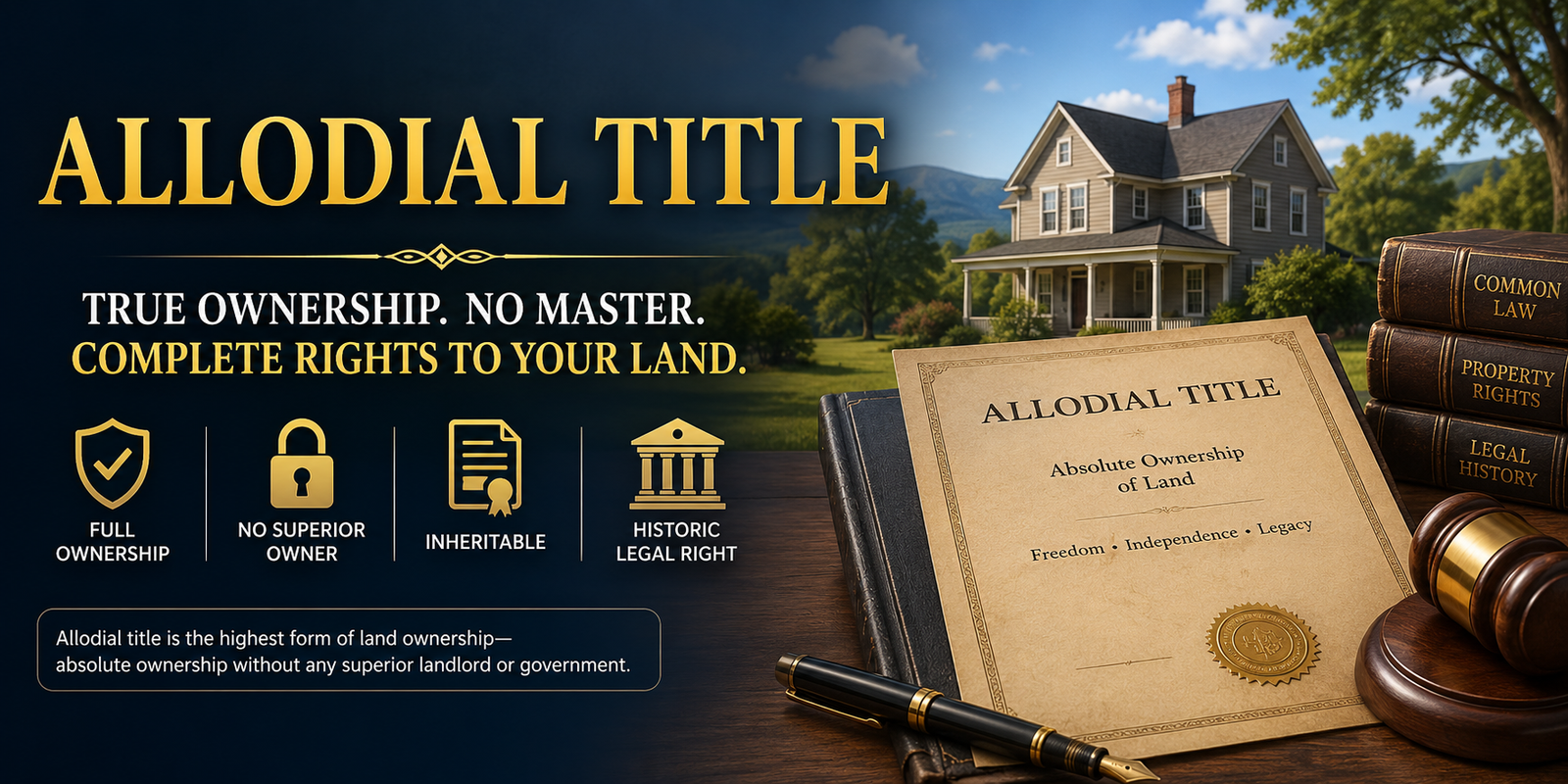
The allodial title is one of the earliest forms of property ownership in relation to real estate, where property owners enjoy property rights without any feudal duties. In contemporary times, the definition of the allodial title has been of interest to people owning properties, lawyers, and research students. Nonetheless, the internet has several misconceptions regarding what an allodial title offers. Many consider the allodial title as a means of avoiding property taxes and government jurisdiction or as the epitome of total land freedom. This article highlights the historical significance, definition, advantages, and disadvantages of the allodial title.
Understanding allodial title requires looking at the history of property ownership and how legal systems have evolved over centuries. Modern land ownership in most countries operates differently from the ancient concept of allodial ownership. Even though the term still exists in legal and historical discussions, its practical application is limited in many jurisdictions.
In this guide, we’ll explain what an allodial title is, how it differs from traditional property ownership, its historical origins, and whether obtaining one is actually possible today. By the end, you’ll have a clear understanding of this fascinating legal concept without relying on myths or misleading information.
What Is an Allodial Title?
An allodial title refers to the highest form of property ownership recognized in legal history. Under an allodial title, a landowner possesses property free and clear of obligations to any superior landlord, feudal ruler, or private individual. In its original sense, allodial ownership meant that the owner had complete control over the land without owing rent, services, or loyalty to another landholder.
Historically, allodial ownership existed before feudal systems became widespread in Europe. As kingdoms expanded, land ownership gradually shifted toward feudal tenure, where individuals held land from kings or nobles in exchange for taxes, military service, or other obligations. The concept of pure allodial ownership became increasingly rare as governments established centralized legal systems.
Today, the term is mostly used in legal history and academic discussions. In many countries, including the United States, private property owners generally hold title under modern statutory systems rather than true allodial ownership. Although homeowners enjoy significant property rights, those rights typically remain subject to government powers such as taxation, zoning regulations, and eminent domain.
The History of Allodial Title

The roots of allodial title stretch back thousands of years. Before feudal societies emerged, many communities recognized land ownership that was independent of kings or nobles. Individuals and families could own land outright without paying tribute to a superior authority. This type of ownership reflected a simpler legal structure where personal possession played a significant role.
During the Middle Ages, feudalism dramatically changed the landscape of property ownership. Kings claimed ultimate ownership of land and granted estates to nobles, who in turn leased portions to knights and tenants. Instead of owning land absolutely, people often held property under various forms of tenure that came with responsibilities and obligations.
As modern governments developed, feudal systems gradually disappeared, but they were replaced with statutory property laws rather than widespread restoration of allodial ownership. Today’s legal systems provide strong protections for landowners while still recognizing governmental authority over taxation, land use, environmental regulation, and public infrastructure projects.
How Does an Allodial Title Differ from Standard Property Ownership?
One of the biggest misconceptions surrounding allodial title is the belief that modern property ownership automatically qualifies as allodial ownership. Although homeowners enjoy broad rights over their property, legal ownership today usually includes certain obligations imposed by government.
For example, property owners generally pay annual property taxes that support schools, emergency services, road maintenance, and local government operations. Failure to pay these taxes may eventually result in legal consequences, including tax liens or foreclosure proceedings. This ongoing obligation distinguishes modern ownership from the traditional concept of an allodial title.
Another important difference involves eminent domain. Governments in many jurisdictions possess the legal authority to acquire private property for public use, provided they follow established legal procedures and compensate property owners where required by law. An absolute allodial title, in its historical sense, would not typically recognize a superior governmental claim over the property.
Common Myths About Allodial Title
One of the most widespread myths is that anyone can simply file paperwork and convert their existing property into an allodial title. In reality, there is no universal legal process that allows homeowners to transform ordinary property ownership into true allodial ownership simply by submitting documents.
Another misconception is that an allodial title automatically eliminates property taxes. While historical allodial ownership generally did not involve taxes owed to a feudal superior, modern governments operate under constitutional and statutory authority. Property taxation depends on current laws rather than historical ownership concepts, meaning an allodial title rarely functions as a tax exemption in contemporary legal systems.
Some online sources also claim that allodial title provides complete immunity from government regulation. This claim is inaccurate in most jurisdictions. Building codes, zoning regulations, environmental protections, and public safety laws generally continue to apply regardless of the terminology used to describe property ownership.
Is It Possible to Obtain an Allodial Title Today?
The answer depends largely on the country and its legal framework. In most modern legal systems, genuine allodial title is either unavailable or exists only in very limited historical or statutory contexts. Most private property is held under fee simple ownership, which grants extensive rights while remaining subject to government authority.
Certain jurisdictions have experimented with limited forms of allodial title or similar legal concepts, but these programs often involve specific eligibility requirements and do not create absolute immunity from taxes or regulations. Because property law varies significantly by location, anyone researching this topic should review the laws that apply in their jurisdiction rather than relying on generalized online claims.
Individuals considering legal action related to property ownership should also consult a qualified attorney specializing in real estate law. Property rights involve complex legal principles, and professional guidance helps ensure that decisions are based on current law rather than outdated interpretations or misinformation.
Benefits Commonly Associated with Allodial Title
The idea of allodial title appeals to many people because it represents the highest level of property independence. The historical concept emphasizes complete ownership without obligations to a superior landlord, making it an attractive symbol of personal freedom and financial security.
Many supporters also view allodial ownership as protection against arbitrary interference in property rights. Since the owner theoretically controls the land without external claims, the concept has long been associated with autonomy and long-term stability. These characteristics help explain why discussions about allodial title continue to generate public interest.
However, it is important to distinguish between historical ideals and present-day legal realities. While allodial ownership symbolizes complete control, modern legal systems balance individual property rights with broader public interests such as infrastructure, environmental protection, and community planning. Understanding this distinction helps avoid unrealistic expectations.
Challenges and Legal Considerations
One of the primary challenges surrounding allodial title is widespread misinformation. Numerous websites, videos, and social media posts make extraordinary claims that lack legal support. People unfamiliar with property law may mistakenly believe they can avoid taxes or government regulations simply by declaring an allodial title.
Another challenge involves varying legal definitions across jurisdictions. Property law is governed by local statutes, constitutional provisions, and court decisions. As a result, the meaning and legal effect of terms such as allodial title may differ depending on where the property is located.
Careful legal research is essential before making important decisions about land ownership. Consulting official government resources and experienced real estate attorneys provides far more reliable information than relying solely on internet discussions or unofficial guides.
Why Understanding Allodial Title Still Matters
Although true allodial title is uncommon today, the concept remains highly relevant because it helps explain the evolution of modern property law. Studying allodial ownership provides insight into how societies transitioned from tribal landholding systems to feudalism and eventually to today’s statutory property frameworks.
The concept also encourages meaningful discussions about the balance between private ownership and governmental authority. Questions surrounding taxation, land regulation, and individual rights continue to shape legal systems around the world. Understanding the historical foundations of allodial title provides valuable context for these ongoing debates.
Additionally, property owners benefit from understanding the limits and protections associated with modern ownership. Knowing the difference between historical allodial title and contemporary fee simple ownership promotes informed decision-making and reduces the likelihood of being misled by inaccurate legal claims.
Conclusion
In conclusion, allodial title is a unique legal concept that represents the highest form of land ownership, free from obligations to a superior landlord. Although it has deep historical roots, true allodial ownership is rare in modern legal systems, where most property is held under fee simple ownership and remains subject to certain government powers. Understanding the differences between historical allodial title and contemporary property rights helps clear up common misconceptions and promotes informed decision-making. Whether you are researching property law or simply expanding your knowledge, learning about allodial title provides valuable insight into the evolution of land ownership and legal rights.
Although many myths continue to circulate about allodial title, the reality is that true allodial ownership is extremely rare in modern legal systems. Most homeowners possess strong property rights through fee simple ownership, but those rights still exist within a broader legal framework designed to balance private ownership with public interests.