
When people Gartner Stock about technology stocks, the conversation usually revolves around flashy names—cloud giants, AI darlings, or fast-growing software startups. Gartner stock, however, sits in a very different category. It’s not loud, it’s not trendy, and it doesn’t rely on hype cycles. Instead, it has built a reputation as a steady, high-quality business that thrives on expertise, trust, and long-term client relationships.
In this article, we’ll take a detailed, expert-level look at Gartner stock—what the company actually does, how its business model works, why investors care about it, and what risks and opportunities lie ahead. The tone is casual, but the analysis goes deep, so whether you’re a long-term investor or just researching the stock, you’ll walk away with real clarity.
Understanding Gartner as a Business Before the Stock
Before evaluating Gartner stock, it’s important to understand what Gartner actually does. Gartner is not a typical technology company that sells software or hardware. Instead, it sells insight, research, and strategic advice to enterprises, governments, and institutions across the world.
At its core, Gartner is a research and advisory firm that helps organizations make better decisions around technology, leadership, human resources, finance, and operations. Its research is widely known for tools like the Magic Quadrant, which ranks vendors based on execution and vision. These reports often influence multi-million-dollar corporate decisions, giving Gartner immense credibility and influence.
From an investor’s perspective, this business model is powerful. Gartner doesn’t depend on advertising, consumer trends, or rapid product cycles. Instead, it generates revenue primarily through subscriptions and long-term contracts, which creates predictable cash flows and strong client retention. This stability plays a major role in how Gartner stock behaves in the market.
Another important aspect is trust. Gartner’s brand is built over decades, and enterprises rely on its data because it is perceived as neutral, data-driven, and experience-backed. That trust is not easy to replicate, which creates a strong competitive moat.
How Gartner Makes Money and Why It Matters for the Stock
Gartner’s revenue structure is one of the biggest reasons long-term investors find Gartner stock appealing. The majority of its revenue comes from Research, which includes subscription-based access to reports, analyst calls, and decision tools.
This subscription model means clients pay annually, often renewing for many years. High renewal rates translate into consistent revenue, even during economic slowdowns. Unlike many tech companies that suffer when IT spending slows, Gartner often remains resilient because companies still need guidance during uncertain times.
Beyond research, Gartner also earns revenue from Consulting and Conferences. Consulting helps organizations implement strategy, while conferences bring together executives, vendors, and analysts. Although conferences are more cyclical and sensitive to economic conditions, they provide upside during strong business environments.
For Gartner stock investors, this mix is attractive. The research segment provides defensive stability, while consulting and conferences add growth leverage when conditions are favorable. This balanced structure helps explain why Gartner stock has historically shown lower volatility compared to many technology peers.
Historical Performance of Gartner Stock
Looking at the long-term trajectory of Gartner stock, one thing becomes clear: it has been a compounder, not a speculator’s play. Over the years, the stock has steadily increased in value, driven by earnings growth, margin expansion, and disciplined capital allocation.
Gartner has consistently grown revenue while also improving profitability. Operating margins have expanded over time as the company scales its research platform and spreads costs across a growing subscriber base. This operational efficiency is a major reason institutional investors respect the stock.
Another notable factor is share repurchases. Gartner has actively bought back its own shares, reducing the share count and boosting earnings per share. For long-term holders, this quietly enhances returns without the need for flashy announcements.
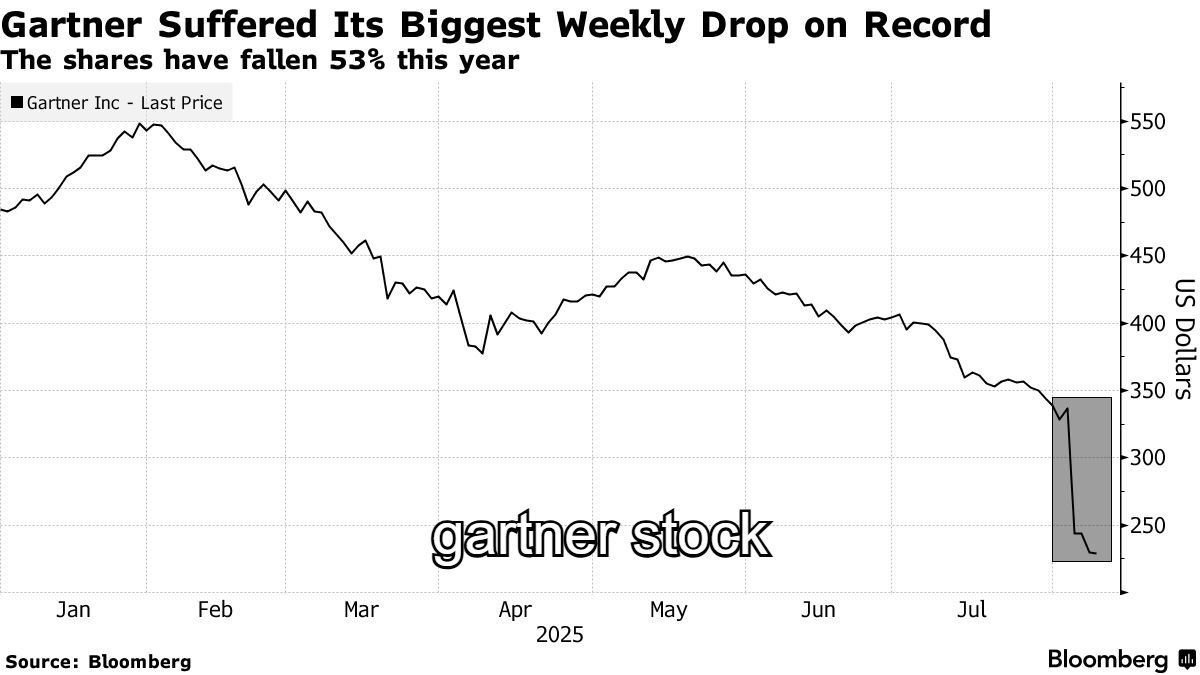
While Gartner stock has experienced pullbacks—especially during broader market sell-offs—it has often recovered strongly. Investors tend to view dips as buying opportunities because the underlying business fundamentals remain intact. This behavior reflects confidence in Gartner’s long-term value proposition rather than short-term market sentiment.
Why Institutional Investors Pay Attention to Gartner Stock
One of the strongest signals of quality in a stock is institutional interest, and Gartner stock consistently attracts large professional investors. The reason is simple: Gartner fits the profile of a high-quality, predictable, cash-generating business.
Institutional investors value Gartner’s recurring revenue, strong free cash flow, and low customer churn. These traits reduce uncertainty, which is critical when managing large portfolios. Gartner doesn’t need aggressive acquisitions or risky innovation bets to grow; its core research offering continues to deepen in value as data accumulates.
Another reason institutions like Gartner stock is pricing power. Gartner regularly raises prices, and clients often accept those increases because the cost of Gartner’s services is small relative to the value they provide. When a single Gartner insight can influence a multi-million-dollar decision, subscription fees feel negligible to clients.
This pricing power helps protect margins during inflationary periods, making Gartner stock attractive even in challenging macroeconomic environments.
Growth Drivers That Could Shape the Future of Gartner Stock
Although Gartner is often seen as a mature company, it still has meaningful growth drivers. One major driver is digital transformation. As companies invest in cloud computing, cybersecurity, artificial intelligence, and data analytics, the need for trusted guidance increases.
Gartner has also expanded its reach beyond IT leaders into HR, finance, supply chain, and executive leadership. This cross-functional expansion allows Gartner to sell more services to existing clients, increasing revenue per customer without relying solely on new client acquisition.
International growth is another factor. While Gartner has a strong presence in North America and Europe, emerging markets still represent an opportunity. As enterprises in these regions mature technologically, demand for Gartner’s research and advisory services is likely to grow.
From a stock perspective, these drivers suggest that Gartner stock may continue delivering steady, mid-to-high single-digit revenue growth with solid margin support—an appealing combination for long-term investors.
Risks and Challenges Investors Should Not Ignore
No stock is without risk, and Gartner stock is no exception. One key risk is valuation. Because Gartner is widely viewed as a high-quality business, the stock often trades at a premium compared to traditional consulting or research firms. This means future returns depend heavily on continued execution.
Another risk lies in economic downturns. While Gartner’s subscription model is resilient, severe or prolonged recessions can lead companies to scrutinize budgets more closely. Consulting and conference revenues, in particular, are more sensitive to economic cycles.
Competition is also worth mentioning. While Gartner has a strong moat, niche research firms and in-house corporate analytics teams could slowly erode demand if Gartner fails to innovate. Maintaining relevance requires continuous investment in data quality, analyst expertise, and emerging technology coverage.
Finally, investor expectations matter. Because Gartner stock is seen as a “safe” tech-adjacent investment, any earnings disappointment—however small—can lead to short-term stock pressure.
Is Gartner Stock a Good Long-Term Investment?
Whether Gartner stock is a good investment depends on your goals. If you’re looking for explosive growth or quick gains, Gartner may not be the right fit. But if your strategy focuses on long-term compounding, business quality, and downside resilience, Gartner stock deserves serious consideration.
The company operates in a niche that benefits from complexity. As technology becomes more complicated, organizations increasingly need expert guidance. Gartner sits at the intersection of data, experience, and trust—a powerful position that few competitors can replicate.
For patient investors, Gartner stock represents the kind of business you can hold through market cycles, reinvest dividends (if applicable), and rely on management to allocate capital sensibly. It may not dominate headlines, but it often rewards discipline and patience.
Final Thoughts on Gartner Stock
Gartner stock is a textbook example of how boring can be beautiful in investing. It doesn’t rely on consumer hype or bleeding-edge innovation. Instead, it wins through credibility, consistency, and deep relationships with decision-makers.
With a durable business model, recurring revenue, strong margins, and long-term growth drivers, Gartner continues to justify its reputation as a high-quality compounder. While valuation and macro risks should always be considered, the underlying fundamentals remain strong.